

Augustus John OM, A Jamaican Girl 1937. Tate. © The estate of Augustus John. All Rights Reserved 2023 / Bridgeman Images.
17 rooms in Historic and Early Modern British Art
British artists recalibrate their work in the aftermath of the First World War as they imagine how they could play a part in building a better society
The catastrophic impact of the war prompts many artists in Britain to change their work radically. Before the war, geometric and mechanised forms were seen as new, dynamic and exciting. However, in its aftermath, artists turn back to traditional genres such as portraiture, religious painting and landscapes. They term this mini revival as the ‘Return to Order’. More than revisiting old approaches though, this trend takes realism in new directions.
Younger generations react against pre-war values. They try to enjoy life to the fullest in the years known as the ‘Roaring Twenties’. Some artists portray women’s independence from traditional gendered roles. Others document the new diversity of London’s nightlife, as the city buzzes with new fashions, theatre productions and jazz brought from the United States by Black entertainers. Britain also enters a golden age of cinema and people flock to see new films.
However, this is also a time of depression, deflation and a steady decline of the British economy. By the mid-1920s, unemployment rises to over ten percent of the workforce in Britain. Declining industry leads to lower wages and increasingly bitter trades disputes. This culminates in a general strike in 1926. The Mass Observation research project documents working-class life during this period of economic decline. The Artists International Association leads artists’ opposition to a rise of fascism in Britain.
Surrealist artists are concerned with creating works influenced by dreams and fantasies. They create compositions that reject rationality and conscious thought through practices such as automatic drawing (drawing without thinking). The International Surrealist Exhibition in London in 1936 exposes younger British artists to the movement and encourages them to reimagine their work.
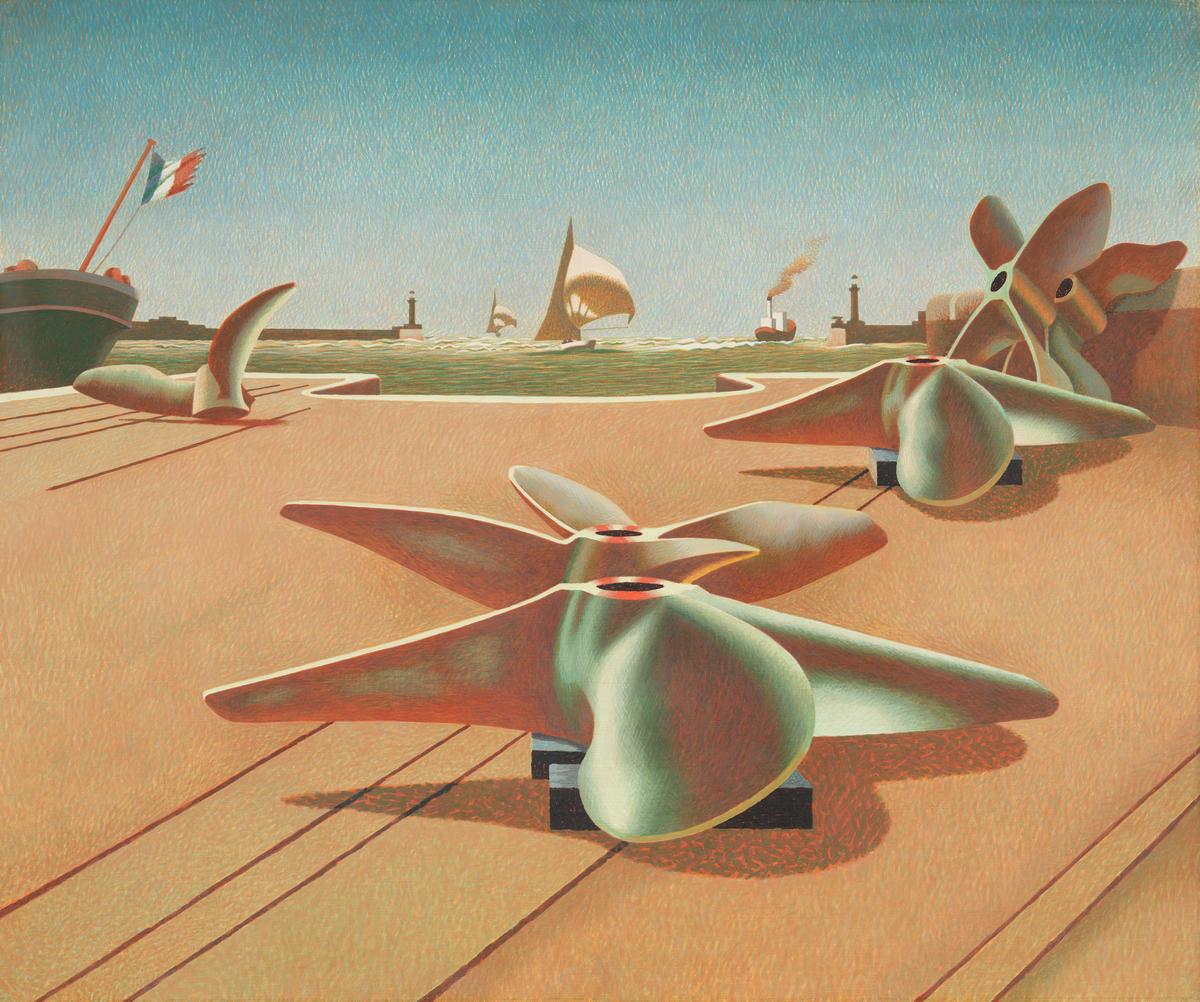
Edward Wadsworth, Bronze Ballet 1940
This harbour scene is based on Le Havre in northern France. Although this is a peaceful scene, it was painted during the early years of the Second World War, in Maresfield in Sussex. From there, Wadsworth could hear the bombing of French ports by the German forces.Wadsworth painted many collections of marine objects like this. He was interested in animism – giving life to inanimate objects. Here the forms of the ships’ propellers suggest movement, or a dance, while also hinting at the function they will perform out at sea.
Gallery label, April 2019
1/30
artworks in Reality and Dreams
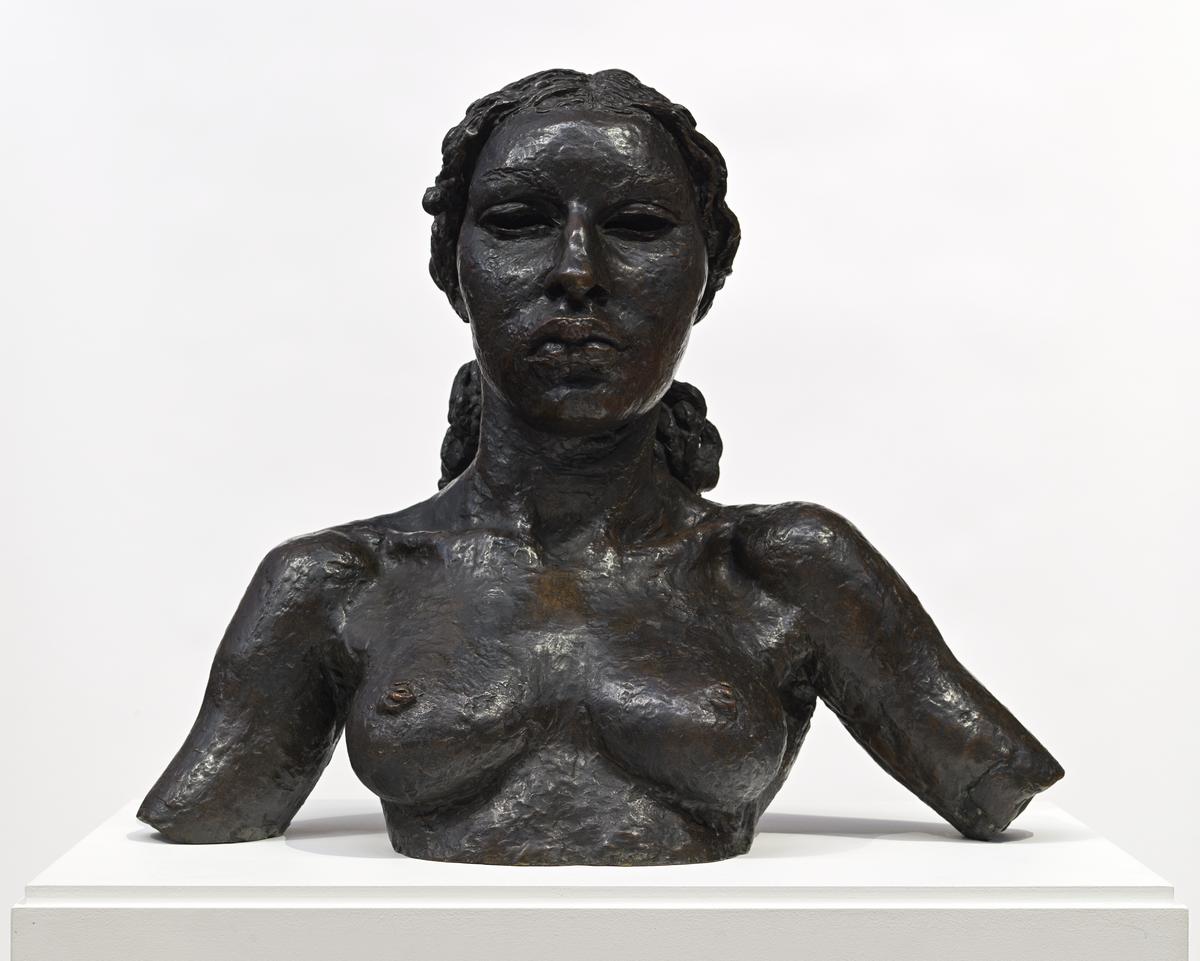
Sir Jacob Epstein, Esther 1930
Gallery label, August 2024
2/30
artworks in Reality and Dreams
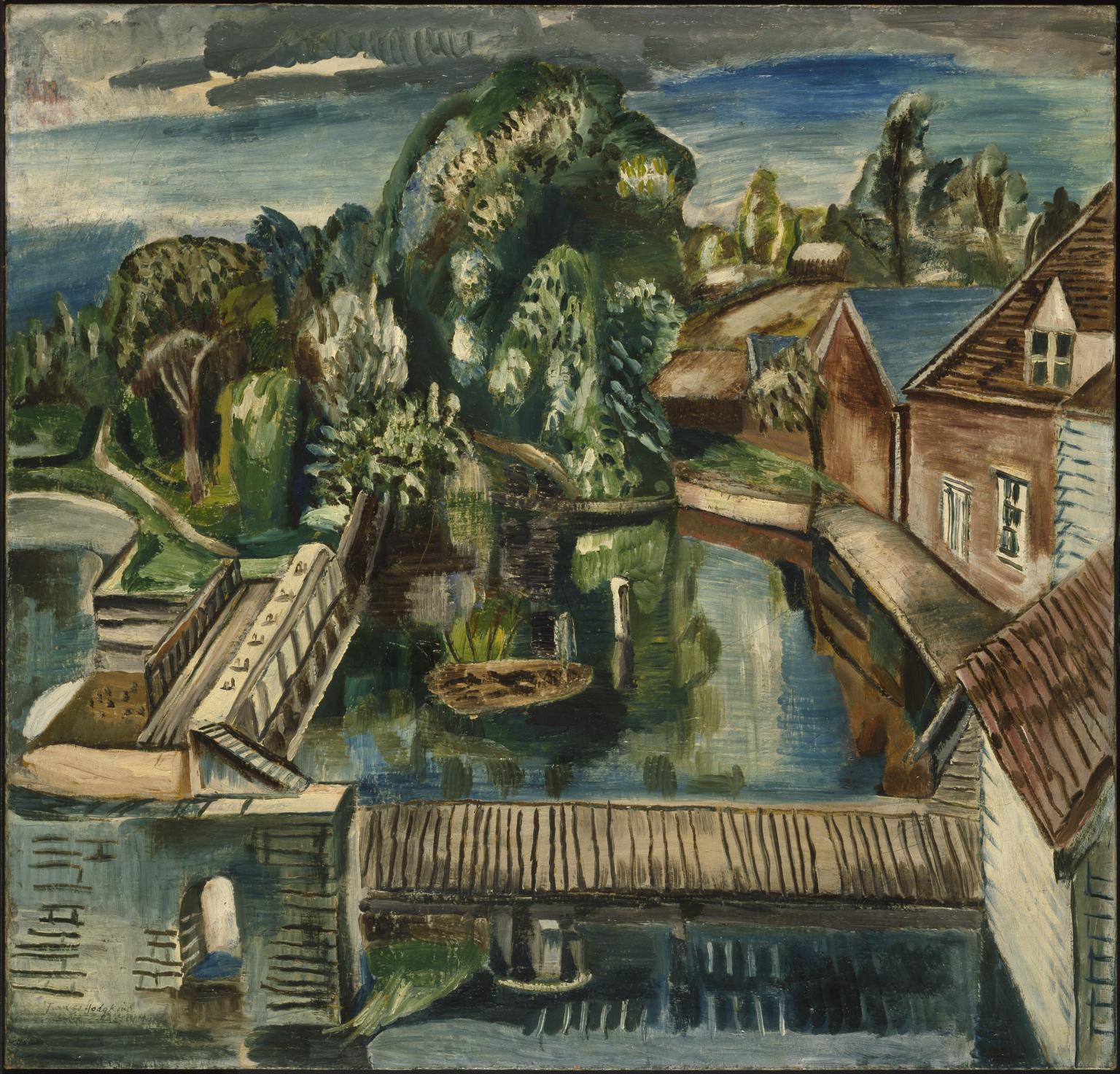
Frances Hodgkins, Flatford Mill 1930
Hodgkins was a New Zealander who came to Europe in 1901. Based mainly in Britain, she also spent time in Paris. She was a member of the Seven & Five Society. In the 1920s, its members developed an art that was both modern and returned to traditional motifs such as landscape and still life. A strong fascination with British landscape and traditions was evident. This is signalled, perhaps, by the fact that this scene was closely associated with John Constable who painted Flatford Mill in 1816.
Gallery label, September 2016
3/30
artworks in Reality and Dreams
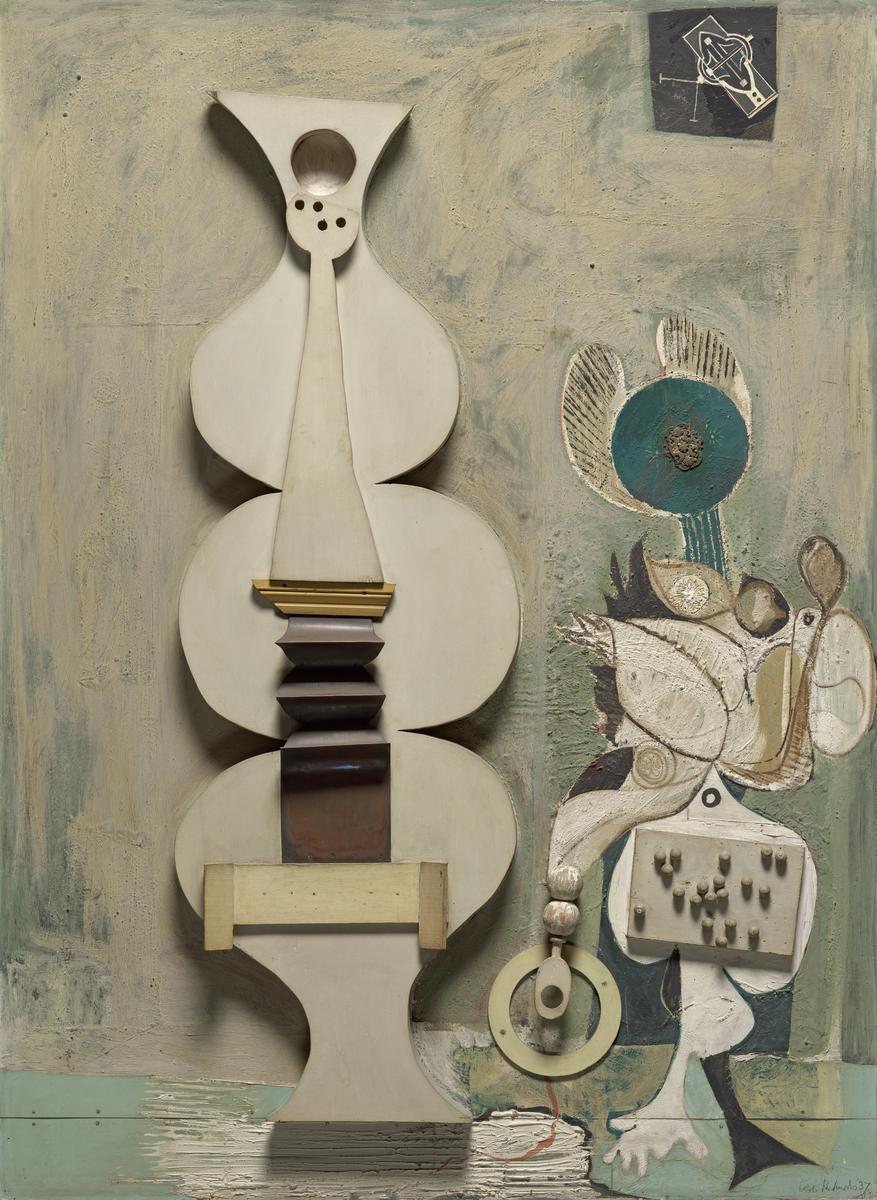
Ceri Richards, Two Females 1937–8
The International Surrealist Exhibition was held at the Burlington Galleries in the summer of 1936, and for a brief moment, in the words of André Breton, London was ‘the centre of the Surrealist universe’. Richards exhibition gave him an opportunity to study important works by Ernst, Picasso and Miro, among others. Subsequently a pronounced erotic sensibility became apparent in Richards’s own loosely surreal work. Two representations of the female form are contrasted in this relief. On the right, virginal, though budding and seductive, and on the left, fulsome and latently sexual.
Gallery label, September 2016
4/30
artworks in Reality and Dreams
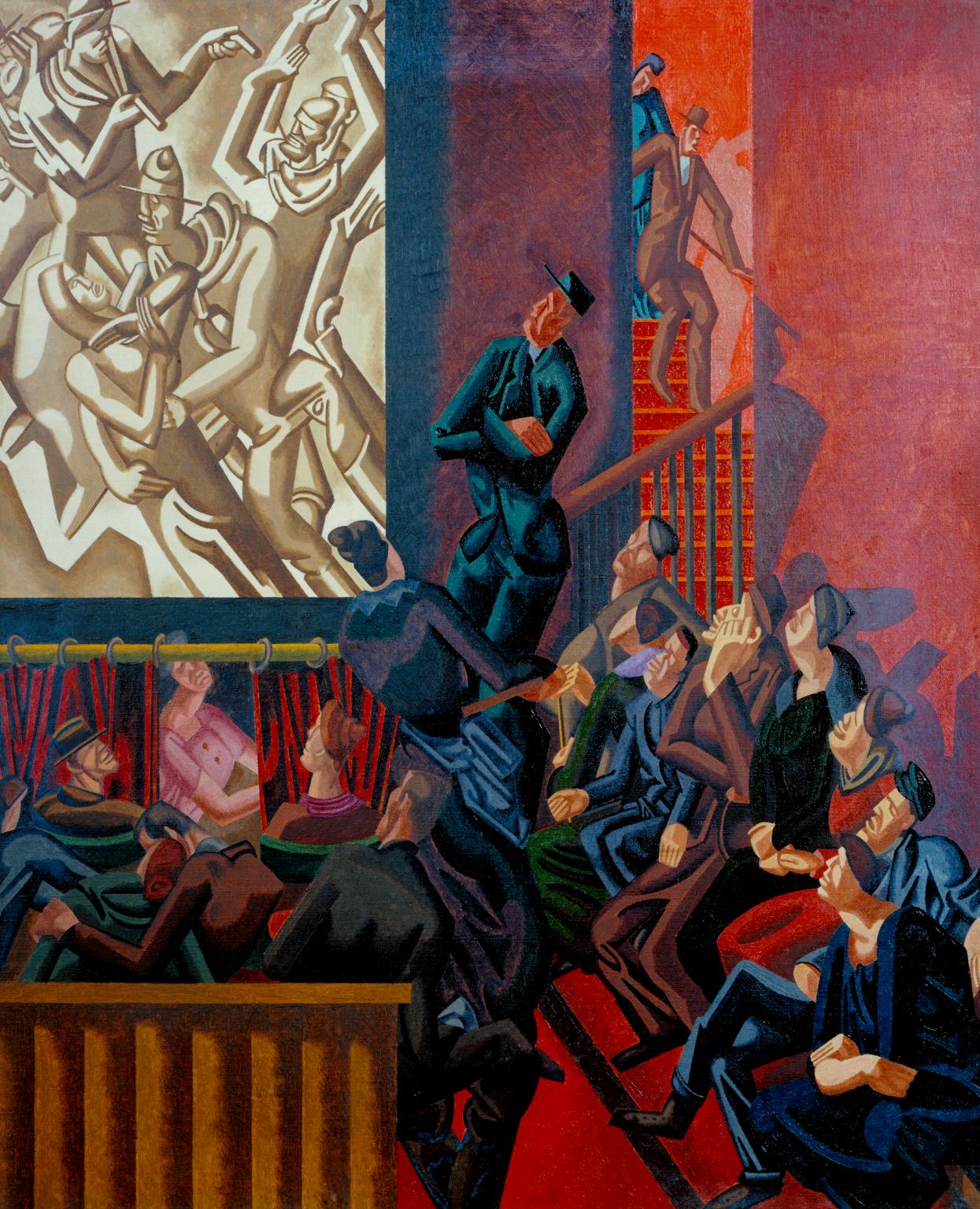
William Roberts, The Cinema 1920
Roberts’s early work was abstract and he joined Wyndham Lewis’s vorticist group. After the First World War, he made a name as the painter of everyday modern scenes. While film had been invented in the late 19th century, it reached new heights of sophistication and popularity in the 1920s, the age of Charlie Chaplin, Buster Keaton and the rise of Hollywood. Movies were silent until 1927 and were accompanied by live music. Many music halls, traditional places of popular entertainment, were adapted to show films.
Gallery label, September 2016
5/30
artworks in Reality and Dreams
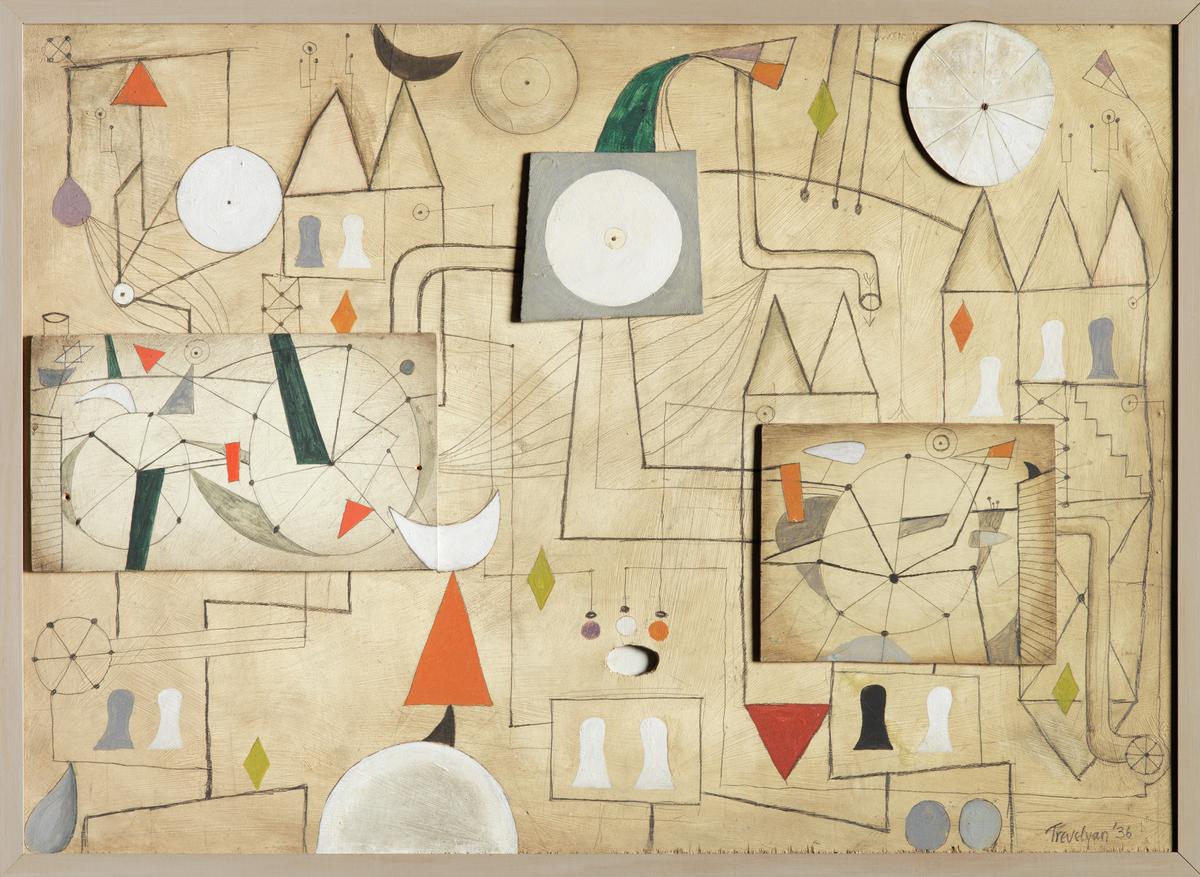
Julian Trevelyan, A Symposium 1936
Trevelyan became interested in Surrealism while at Cambridge, and came to know many of the movement’s leading artists when he lived in Paris in 1931-4. Influenced by Klee and encouraged by his friendship with Miró and Calder, he gradually developed his own mode of abstract Surrealism. In A Symposium Trevelyan combined painting and carving and attached parts to the wooden panel. He later recalled: ‘I had invented a sort of mythology of cities, of fragile structures carrying here and there a few waif-like inhabitants.’
Gallery label, December 2005
6/30
artworks in Reality and Dreams
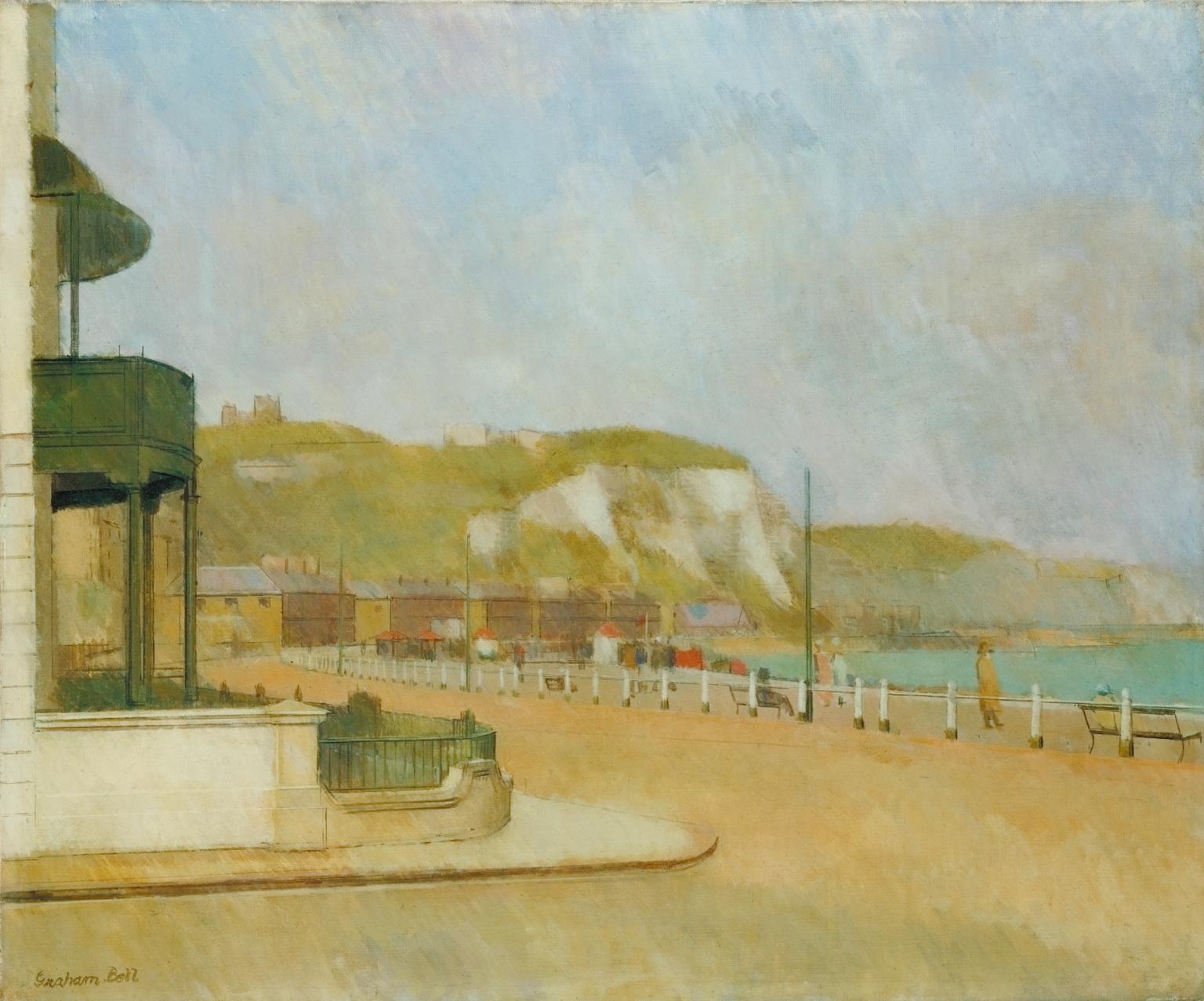
Graham Bell, Dover Front 1938
Bell painted this picture on a trip to Dover in 1938 to fulfill a commission for the International Business Machines Corporation. The finely-observed detail of the hotel on the left, the chalk white cliffs and castle ramparts is typical of the realism of the Euston Road School, with which Bell was closely involved.
Although the artist painted on the spot, he may have used the photograph shown to the left to work on the details in his studio.
Gallery label, September 2004
7/30
artworks in Reality and Dreams
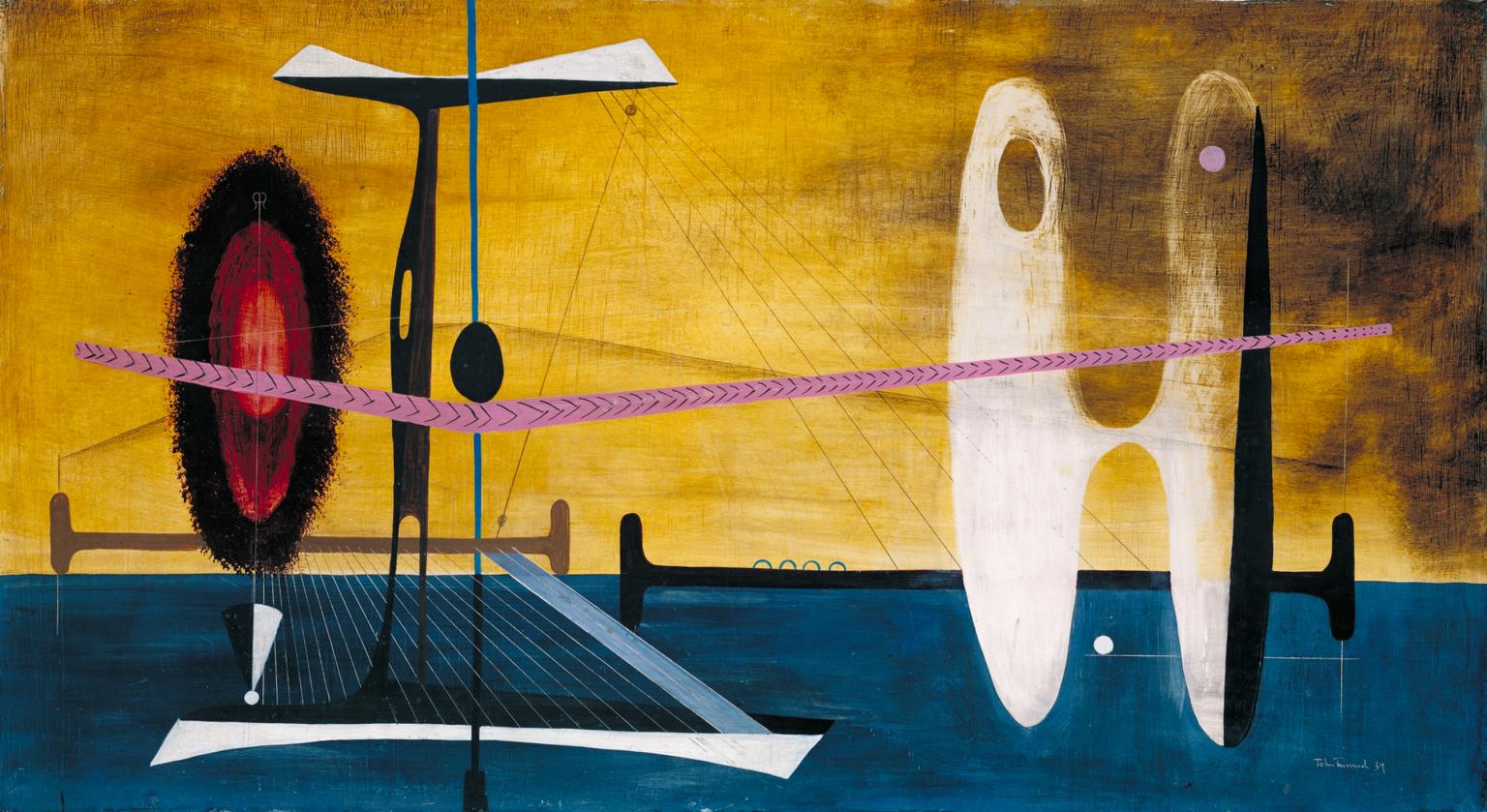
John Tunnard, Fulcrum 1939
An advocate of surrealism in Britain, Tunnard was interested in experimental techniques that summon an imaginative world. He developed a unique vision of quasi-mechanical structures in deep space that remain mysterious. Tunnard was taken up by the American collector Peggy Guggenheim and shown in her London gallery in 1939. The story goes that he crossed the private view to introduce himself to a prospective collector by turning three somersaults.
Gallery label, September 2016
8/30
artworks in Reality and Dreams
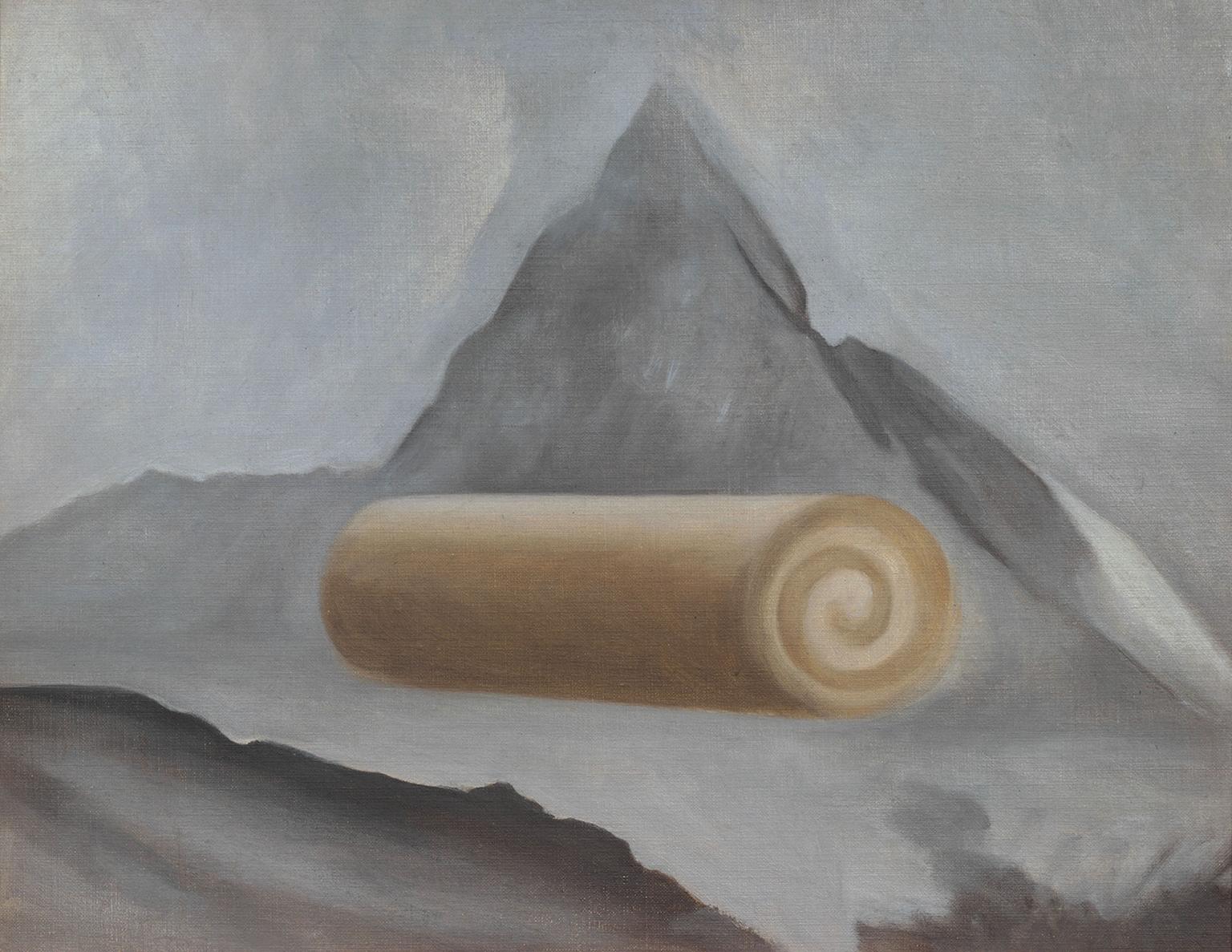
Humphrey Jennings, Swiss Roll 1939
9/30
artworks in Reality and Dreams
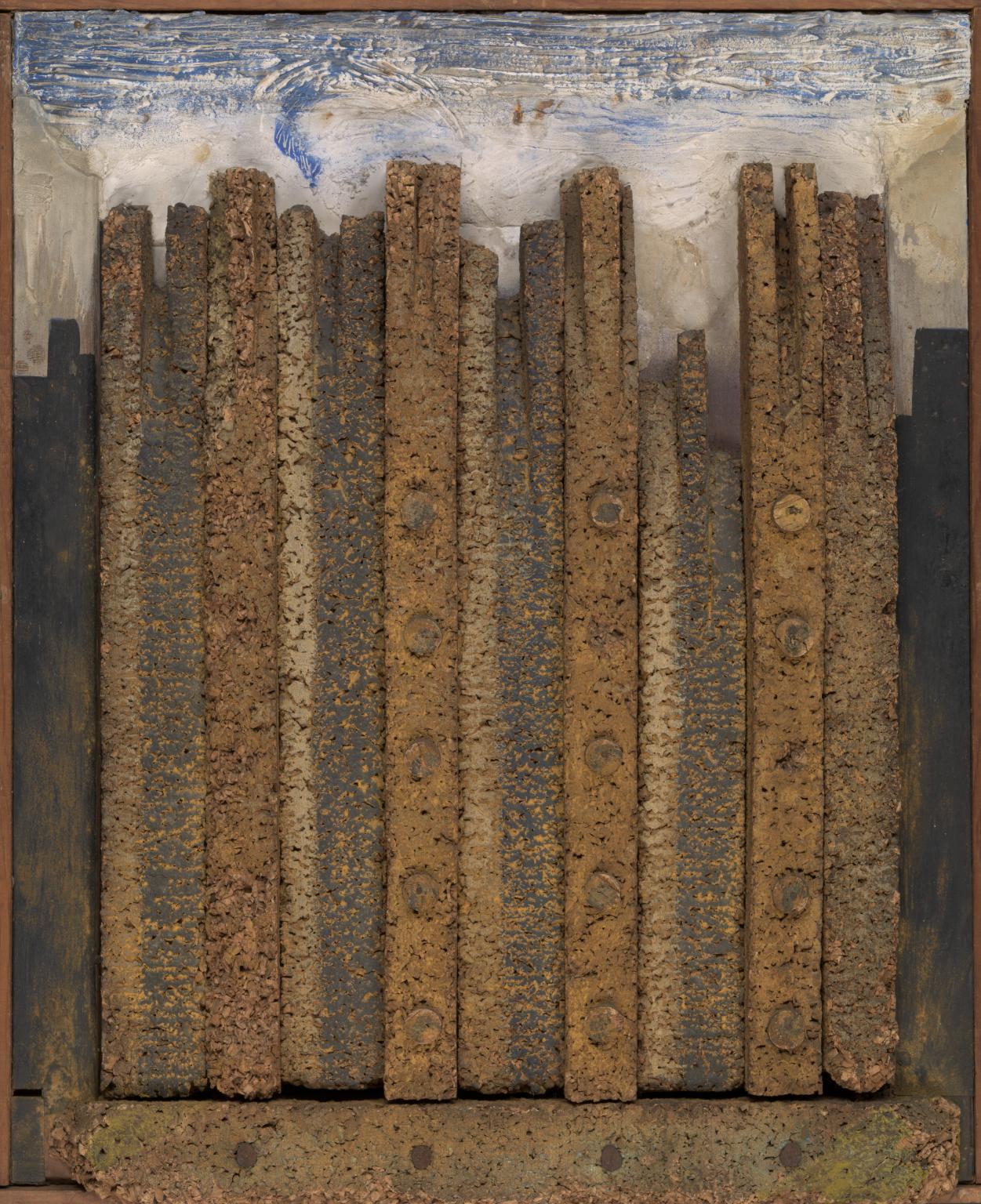
Max Ernst, Dadaville c.1924
Ernst was a key figure in the anarchic circles of Cologne Dada before moving to Paris and the emerging Surrealist movement. This strange work dates from that moment of transition. The use of rough cork is typical of Ernst’s inventive exploration of materials. By making the walls of the Dada city from this unexpected substance, he may offer a wry reflection on Dada’s temporary, but resilient, nature.
Gallery label, July 2008
10/30
artworks in Reality and Dreams
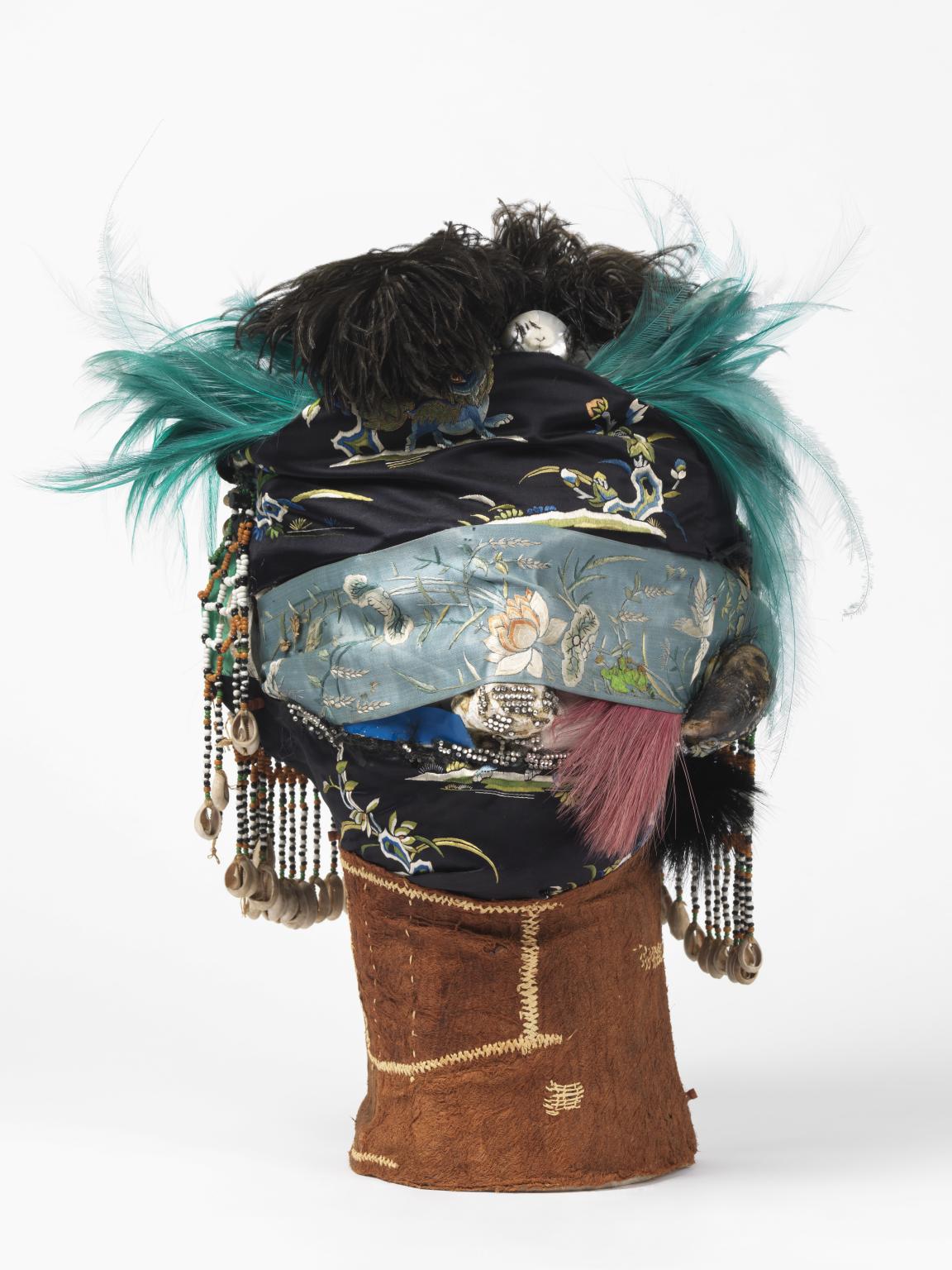
Eileen Agar, Angel of Anarchy 1936–40
The blindfolded Angel of Anarchy is loosely based on an earlier painted plaster head. Agar stated that with this new work she wanted to create something ‘totally different, more astonishing, powerful ... more malign’. It suggests the foreboding and uncertainty that she felt about the future in the late 1930s. Believing that women are the true surrealists, Agar wrote: ‘the importance of the unconscious in all forms of Literature and Art establishes the dominance of a feminine type of imagination over the classical and more masculine order.’
Gallery label, October 2016
11/30
artworks in Reality and Dreams

Winifred Nicholson, Flower Table 1928–9
In the 1920s, Winifred and Ben Nicholson lived a simple, rural life at Bankshead in Cumberland. This work shows pots of flowers wrapped in white tissue paper and arranged on a white table, or butcher's block, in that house. The sunlit table and domestic plant pots take on the appearance of mystical objects on an altar and reflect the craving for a new spirituality and peace that followed the First World War. The sense of a higher reality beyond the mundane is further suggested by the dots of silver paint across the surface of the image.
Gallery label, July 2001
12/30
artworks in Reality and Dreams

Peter László Peri, Building Job 1937
During the 1930s Peri made a number of sculptures of labouring men, based on sketches he’d made in London. This relief shows two workmen supervising the lowering of an I-beam metal girder. The man in the foreground is signalling to the man in the distance to show how the girder should be lowered.
Peri moved to England from Budapest in 1933 and began to exhibit with the Artists International Association. He wrote that his interest was ‘in people, the way they live and their relationships’.
Gallery label, August 2004
13/30
artworks in Reality and Dreams
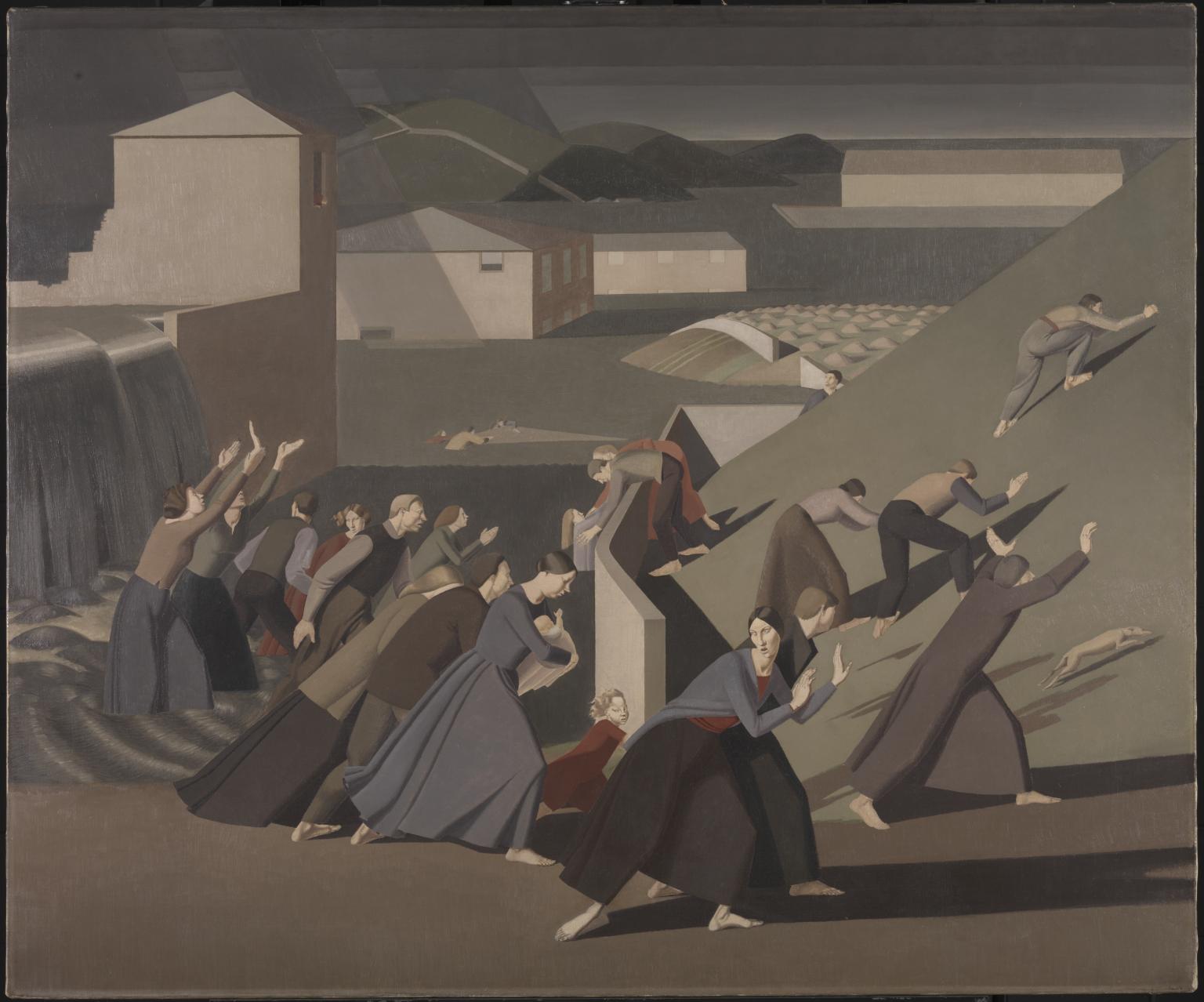
Winifred Knights, The Deluge 1920
Knights was one of several British artists who participated in a revival of religious imagery in the 1920s, while retaining some elements of a modern style. The theme of this work is the Old Testament Flood. In the foreground, people flee the rising waters towards the high ground, while Noah's ark floats calmly in the distance to the right. The frequent use of the word 'deluge' as a metaphor for the all-engulfing First World War would have given the painting a contemporary resonance.
Gallery label, September 2004
14/30
artworks in Reality and Dreams
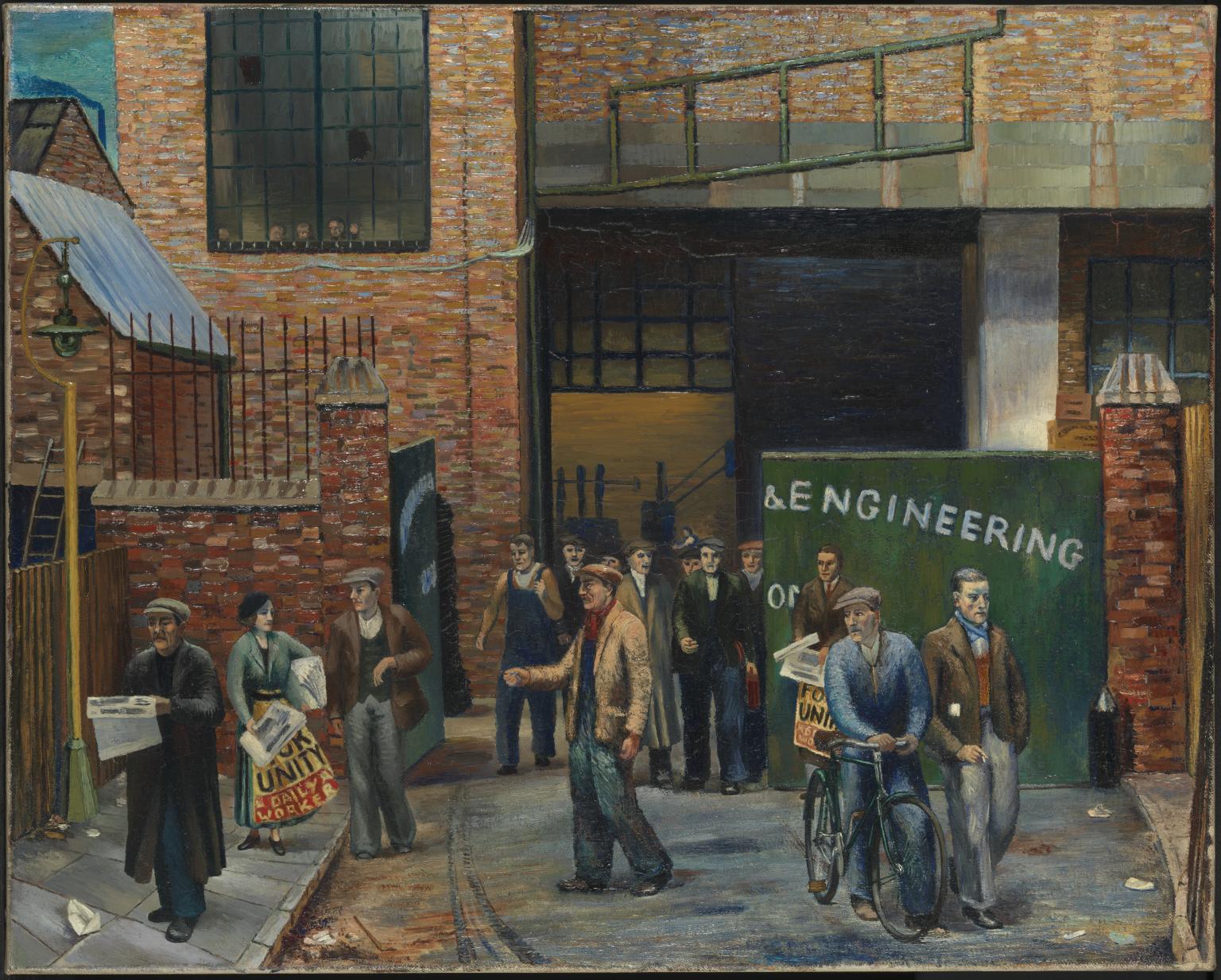
Clive Branson, Selling the ‘Daily Worker’ outside Projectile Engineering Works 1937
Selling the Daily Worker outside the Projectile and Engineering Works shows a man and a woman, probably the artists’ wife (Interview with the artist’s daughter, Rosa Branson, 5 November 2004.), selling copies of the communist newspaper, Daily Worker, outside a munitions factory in Battersea where Branson was then living. The message ‘For Unity’, promoted by both sellers on their aprons, presumably refers to the communist campaign for a united front against fascism. Branson became a member of the Communist Party in 1932 and remained an active member throughout his life. Harry Pollitt (1890-1960), the General Secretary of the Communist Party of Great Britain, described him: ‘Nothing was too much for him: selling the Daily Worker at Clapham Junction, house to house canvassing, selling literature, taking up social issues, and getting justice done – all those little things which go to make up the indestructible foundations of the movement’ (British Soldier in India: The Letters of Clive Branson, London 1944, unpaginated). In the centre of the picture is the red glow of the factory’s furnace, from which the workers seem to spew out onto the street. In the upper left, figures peer out from the window. The subject of a munitions factory in the pre-war years resonated widely, particularly within the communist constituency which saw the main victims of a future war as being working class people killed in the defence of capitalism.
15/30
artworks in Reality and Dreams
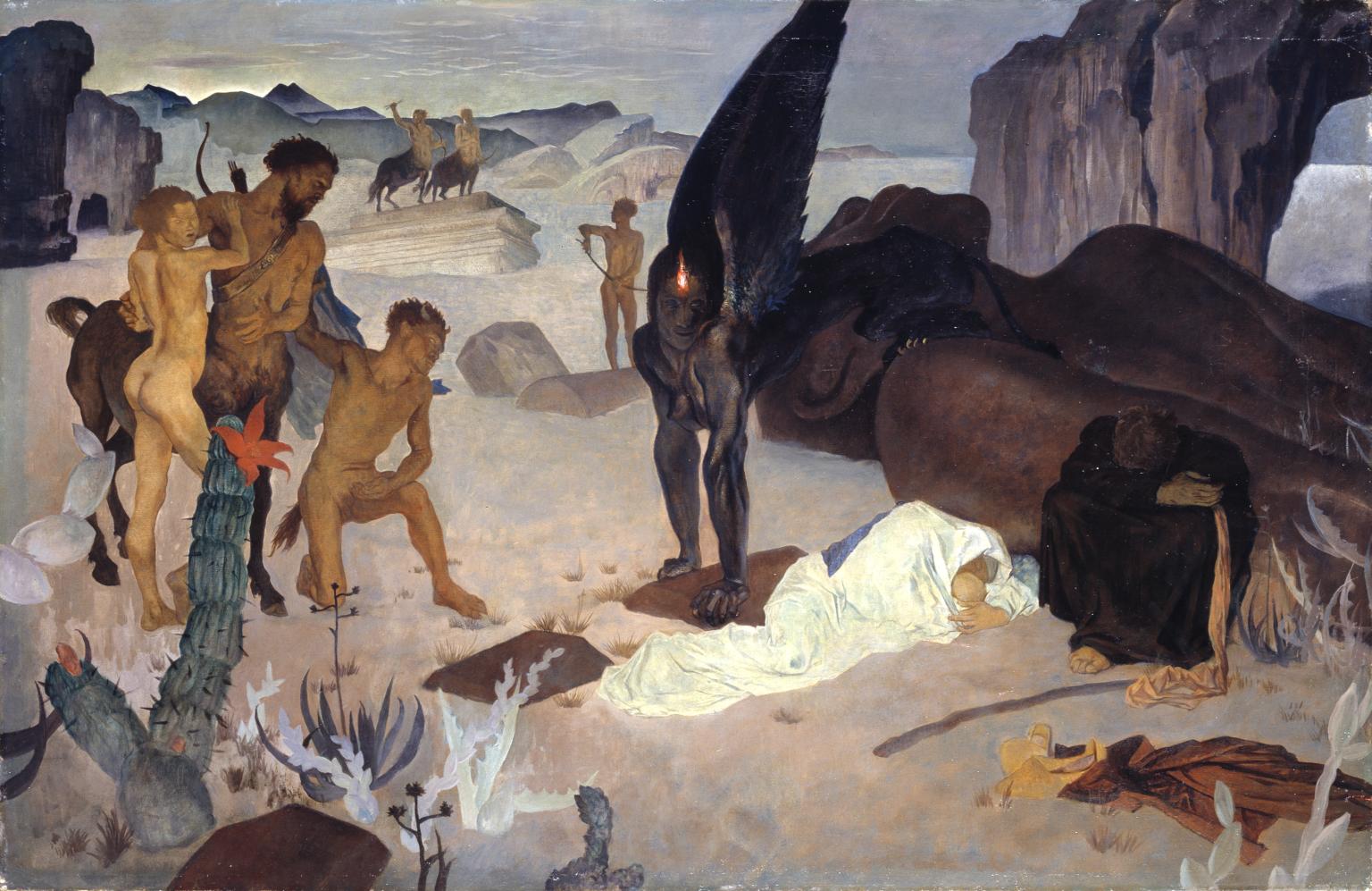
Glyn Warren Philpot, Repose on the Flight into Egypt 1922
Glyn Philpot brings an unusual interpretation to the subject of the Holy Family resting on the flight into Egypt by incorporating mythological figures including a sphinx, a satyr and three centaurs. Philpot’s presentation of the mythological creatures alludes to pagan myths of unrestrained sexuality, and the implication is that this will be replaced by the new religion of Christianity. The Holy Family are seen sheltering against a huge sculpture from a ruined building, fragments of which appear in the background. This dream-like work has been interpreted as an attempt by Philpot to reconcile his adopted Catholicism and his sexual attraction to other men.
Gallery label, March 2018
16/30
artworks in Reality and Dreams
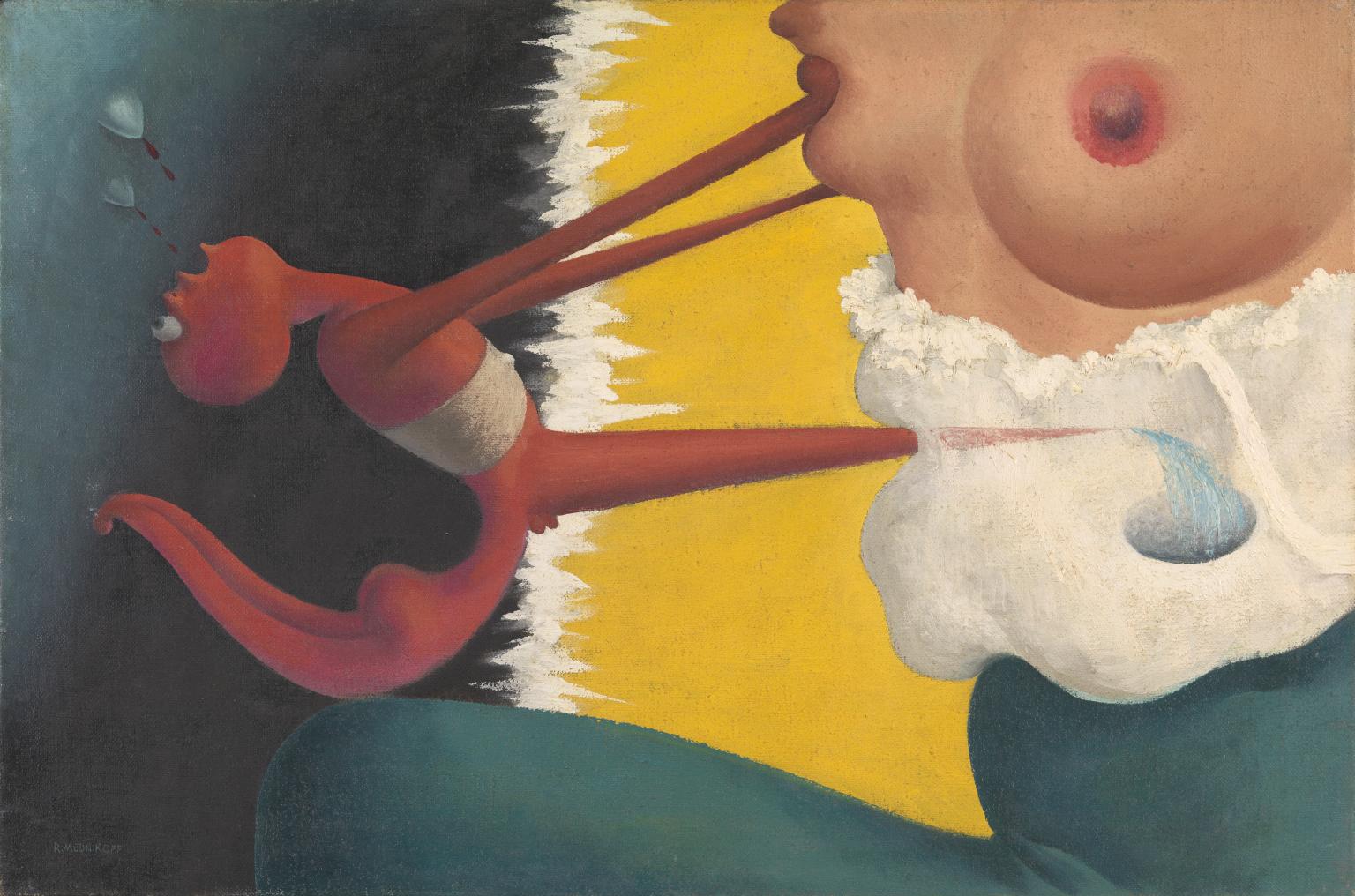
Reuben Mednikoff, December 31, 1937, 8.00pm (Oompah) 1937
December 31, 1937, 8.00pm (Oompah) is a landscape format oil painting on canvas. The background of the painting is divided vertically by a jagged white line – the right two thirds being a flatly painted yellow ground and the left third a dark blue-green. Represented against a yellow field is the semi-naked torso of a woman with breasts exposed, a white chemise under her breasts and her right upper thigh apparently clothed in a snuggly fitting dark fabric. Balancing on her thigh is a red baby or sprite figure with a white band around his waist. A long sharply pointed phallus penetrates and ejaculates through the chemise. His thin long arms reach out, holding onto and pushing against the woman’s right breast; his head arcs back, two drops of milk hanging above his open mouth. The work is titled after the date of its making, as was the artist’s custom, and while Mednikoff was living in Cornwall with his artist partner, Grace Pailthorpe (1883–1971).
17/30
artworks in Reality and Dreams
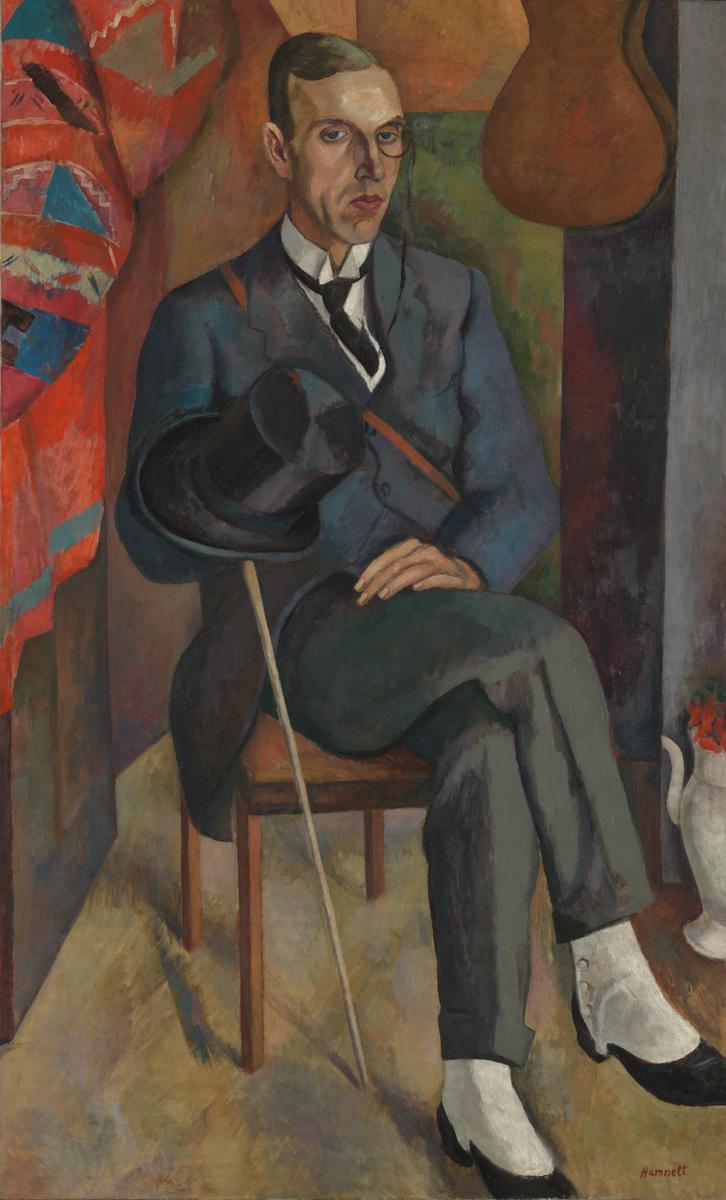
Nina Hamnett, A Gentleman with a Top Hat (George Manuel Unwin Esq) 1921
18/30
artworks in Reality and Dreams
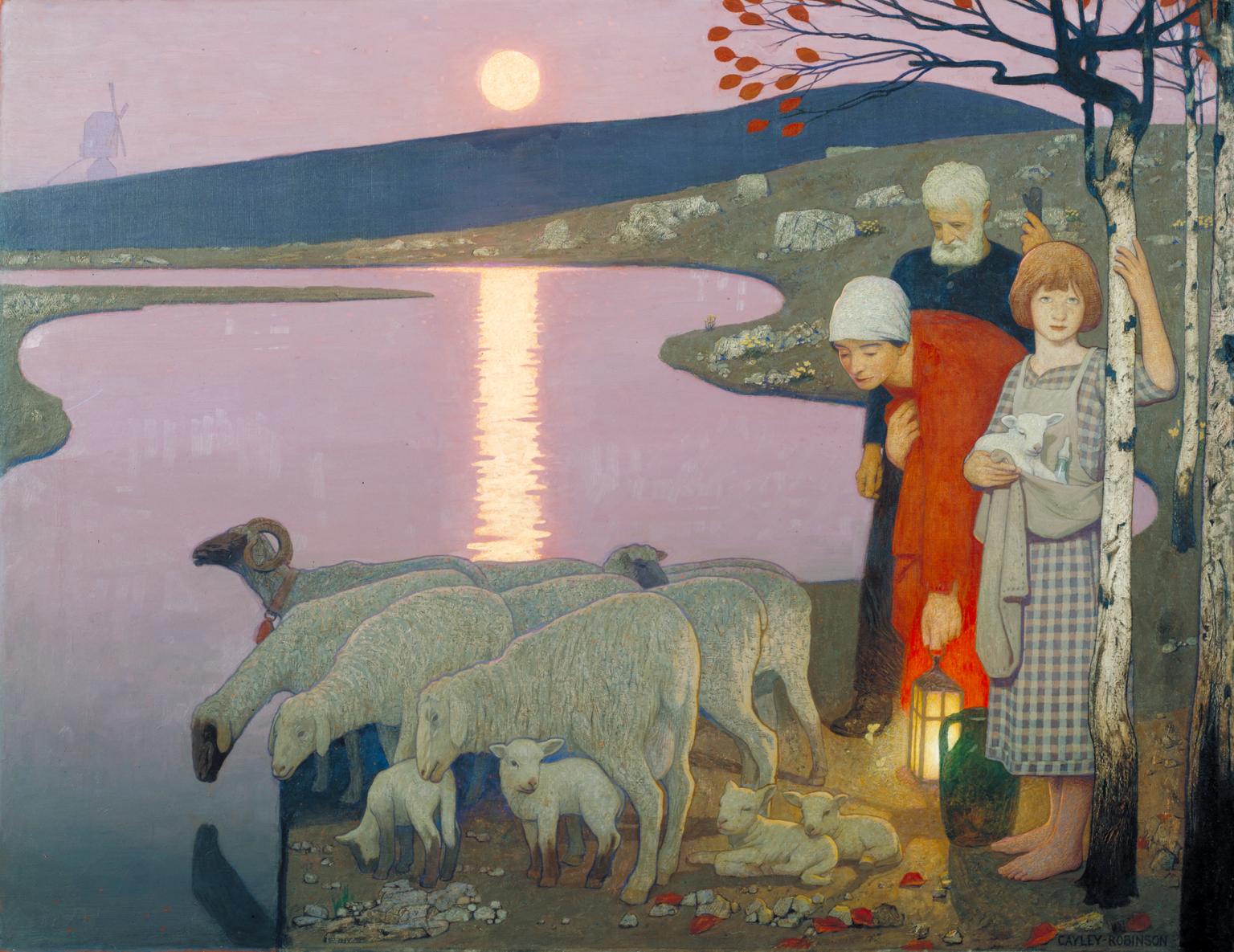
Frederick Cayley Robinson, Pastoral 1923–4
19/30
artworks in Reality and Dreams
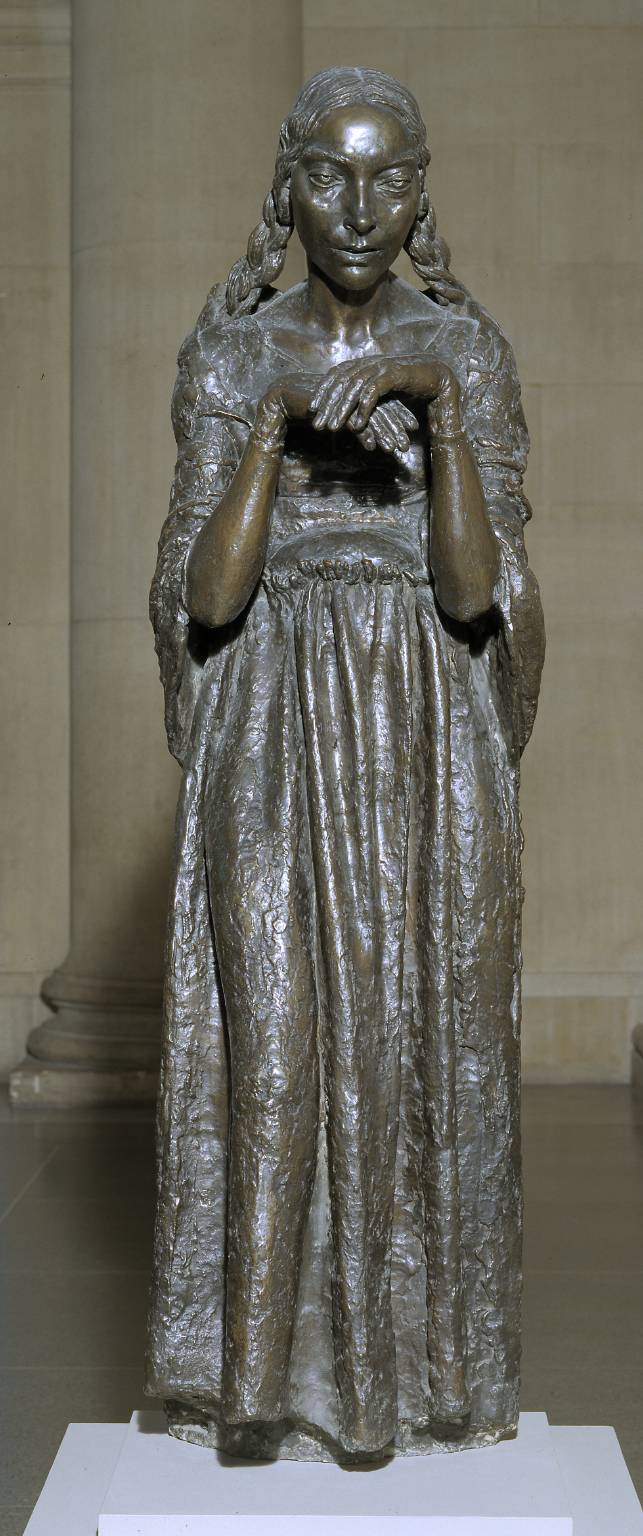
Sir Jacob Epstein, The Visitation 1926
This life-size figure was intended to be one of a pair, never completed, called 'The Visitation'. This was an event recorded in the Bible, where the Virgin Mary visits her cousin Elizabeth to share with her the news that she is to give birth to Jesus. Epstein described this figure as expressing ' a humility so profound as to shame the beholder who comes to my sculpture expecting rhetoric or splendour of gesture'. When he first exhibited it he called it 'A Study' so as to diguise its content.
Gallery label, August 2004
20/30
artworks in Reality and Dreams
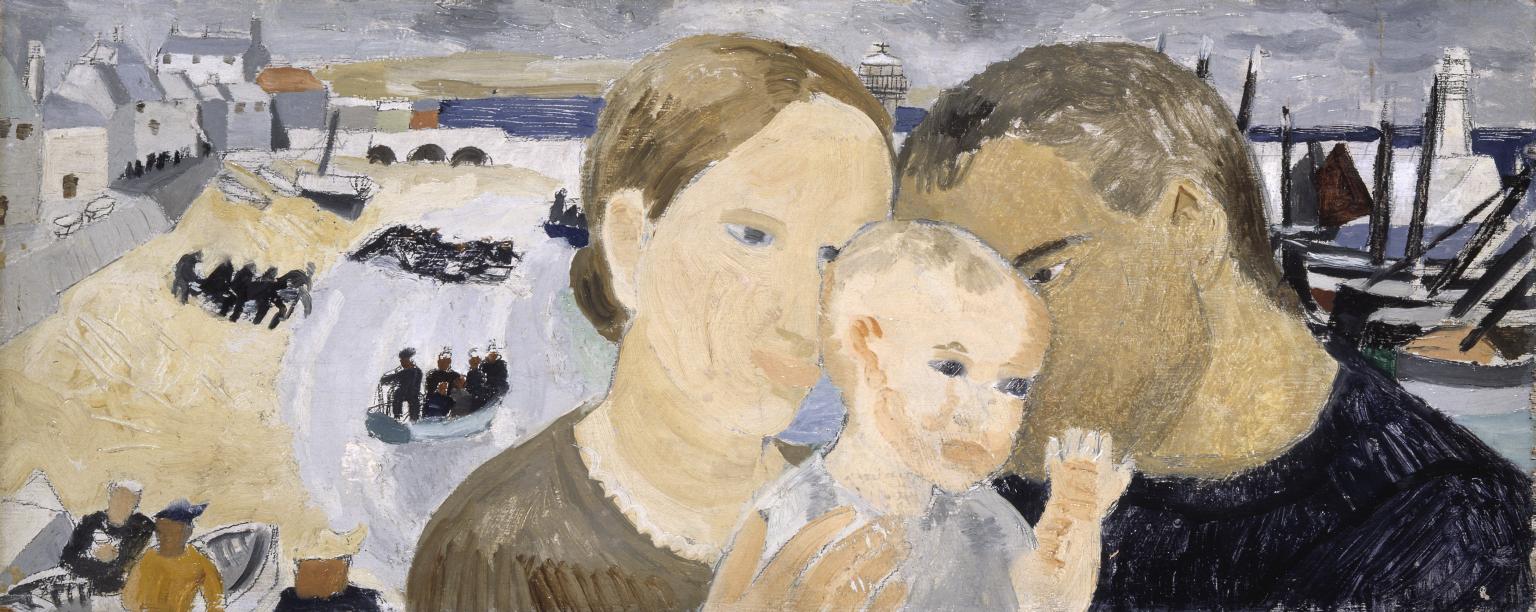
Christopher Wood, The Fisherman’s Farewell 1928
Traditionally, this has been seen as a portrait of Wood’s friends Ben and Winifred Nicholson with their first child. They are shown against the backdrop of the harbour of St. Ives, then a fishing village and an established artists colony. It was painted the year in which Wood and Ben first met Alfred Wallis, the untutored painter whose instinctive style endorsed their own consciously ‘naïve’ mode of painting. To cast Nicholson in the role of fisherman was to invest him with the sort of rooted authenticity to which they aspired in their painting.
Gallery label, July 2007
21/30
artworks in Reality and Dreams
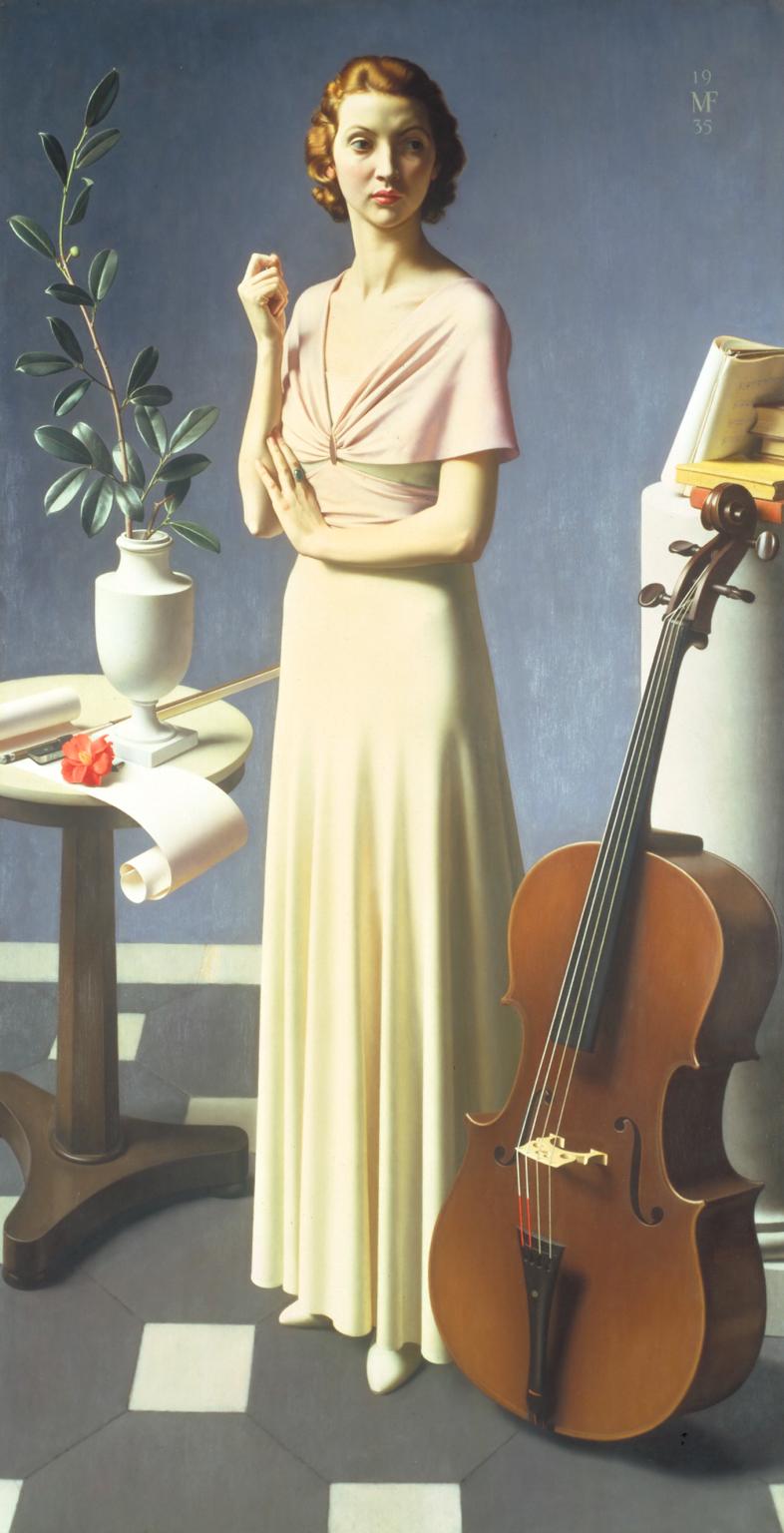
Meredith Frampton, Portrait of a Young Woman 1935
Frampton painted the sitter, Margaret Austin-Jones, standing next to a cello. He noted that, as she was very musical, the cello was an 'appropriate symbol.' Frampton said that he made this painting 'to celebrate an assembly of objects... beautiful in their own right’. Frampton's mother made the dress Margaret is wearing in the painting. The white vase on the table in the background was designed by Frampton. This painting relates to full-length portraits of women, associated with the work of earlier artists. However the clarity and precision of Frampton’s painting style gives this work a modern feeling.
Gallery label, August 2020
22/30
artworks in Reality and Dreams
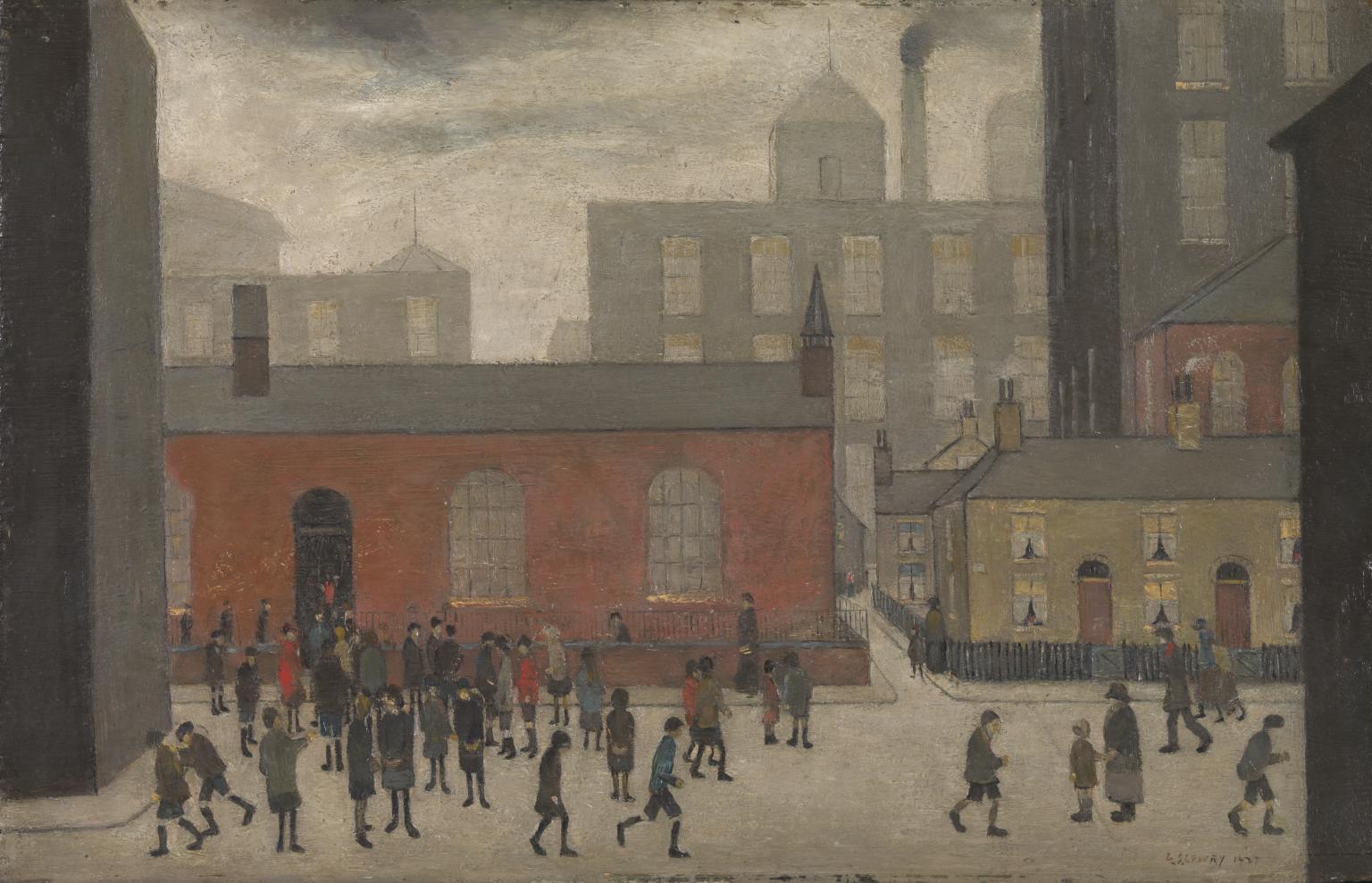
L.S. Lowry, Coming Out of School 1927
Like many of Lowry's pictures this is not a depiction of a particular place, but is based on recollections of a school seen in Lancashire. Lowry's combination of observation and imaginative power often produced images which capture a deeply felt experience of place, with which others could identify. For example, in 1939 John Rothenstein, then Director of the Tate Gallery, visited Lowry's first solo exhibition in London and later wrote: 'I stood in the gallery marvelling at the accuracy of the mirror that this to me unknown painter had held up to the bleakness, the obsolete shabbiness, the grimy fogboundness, the grimness of northern industrial England.' This work was then purchased by the Trustees.
Gallery label, April 1994
23/30
artworks in Reality and Dreams
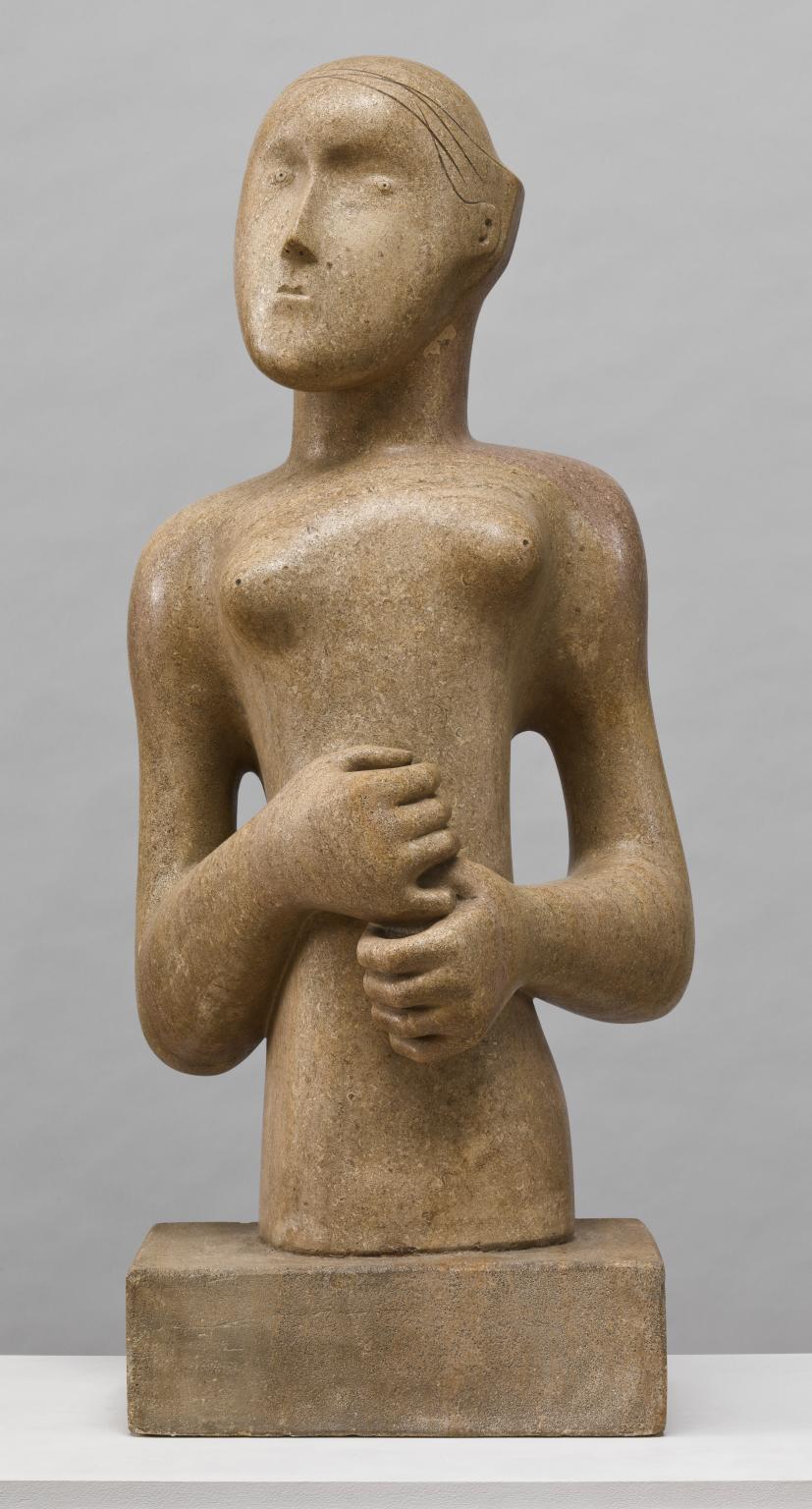
Henry Moore OM, CH, Girl 1931
From the mid-1920s Moore had advocated the abolition of the 'Greek ideal' in sculpture in favour of non-European sources, which he felt had much greater vitality. This work reveals his fascination with the Mesopotamian sculptures in the British Museum, especially solemn standing figures with clasped hands. He reviewed a book on Mesopotamian art for 'The Listener' in June 1935. Around 1931-2 Moore also turned his attention to the study of natural forms, such as shells, bones and pebbles. He then brought together his studies in natural forms with his admiration for non-European 'primitive' sculpture and began to introduce a rhythmic and non-naturalistic approach to the depiction of the human figure.
Gallery label, August 2004
24/30
artworks in Reality and Dreams
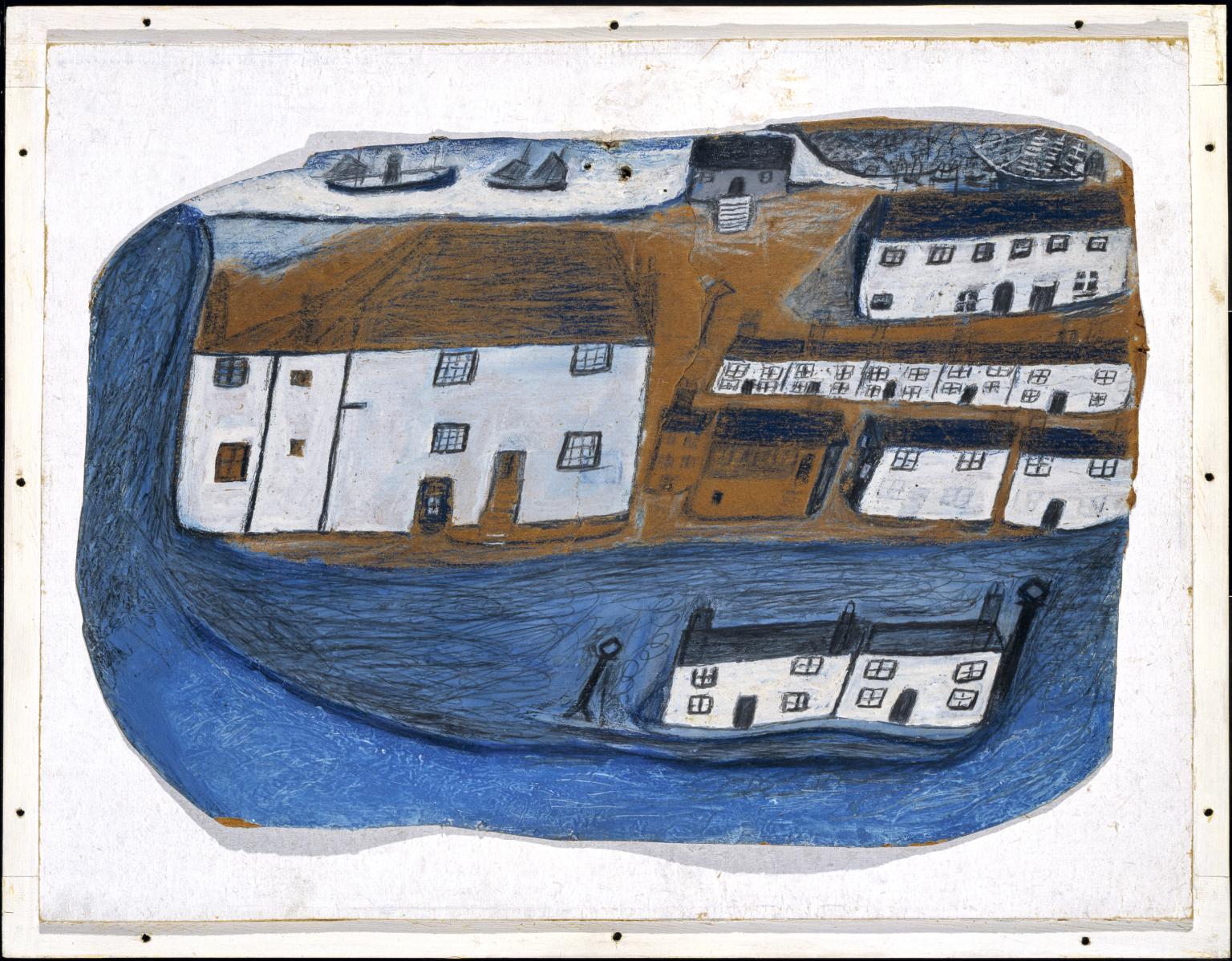
Alfred Wallis, St Ives c.1928
Wallis had worked as seaman, ice cream vendor and scrap merchant before he took up painting as a hobby in his retirement. He lived in St Ives, Cornwall, a fishing community and artists’ colony. There he encountered the painters Ben Nicholson and Christopher Wood and his work was shown with theirs in London. Most of his paintings are of his local environment or of places and events remembered from his past.
Gallery label, July 2017
25/30
artworks in Reality and Dreams
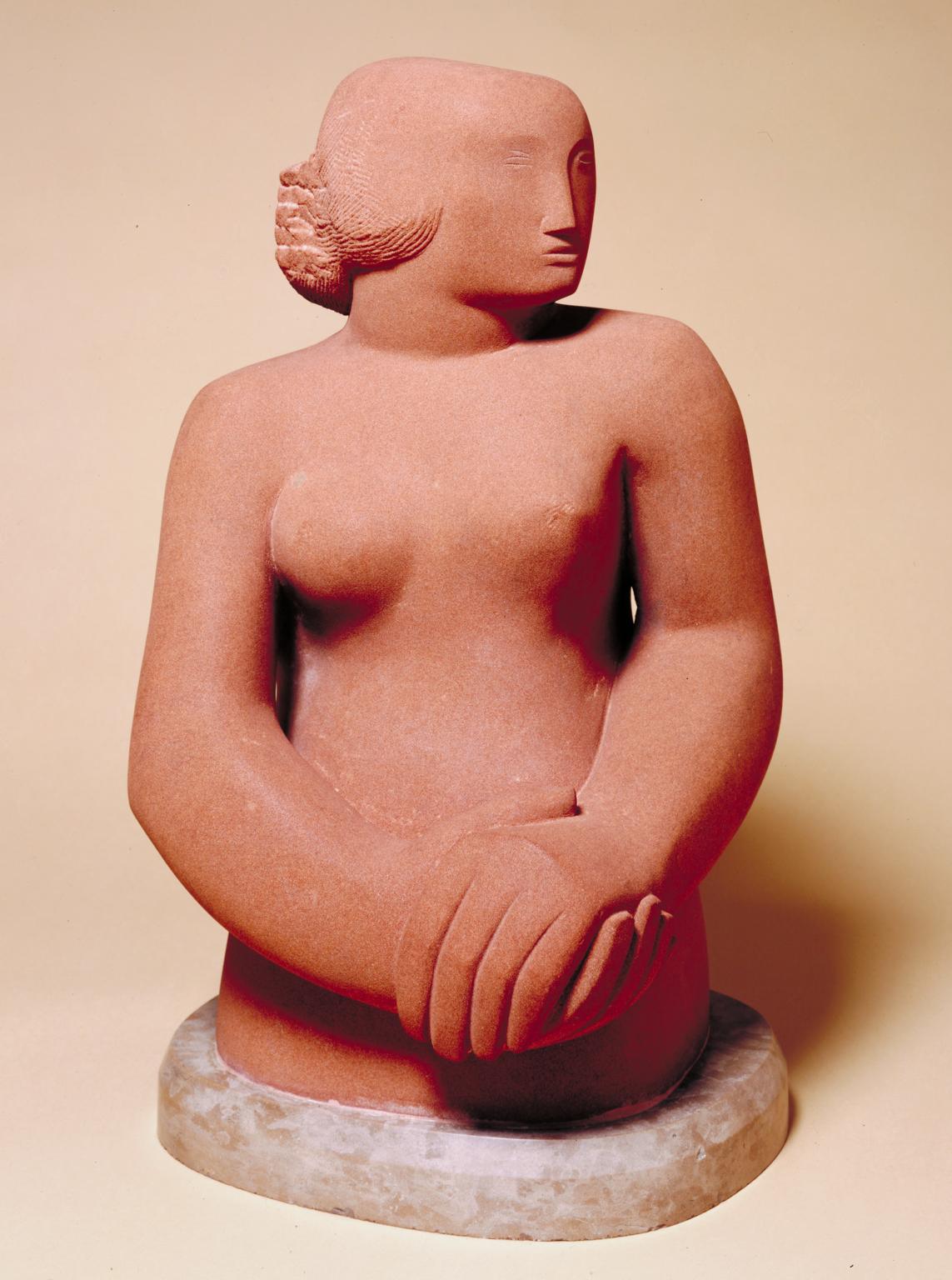
Dame Barbara Hepworth, Figure of a Woman 1929–30
Hepworth was one of a number of sculptors who returned to the handcraft of carving. The resulting immediacy of the artist’s relationship to her material was crucial. She described her process as an ‘effort to find a personal accord with the stones...I was fascinated by the kind of form that grew out of each sculpture, and by the kind of form that grew out of achieving a personal harmony with the material’.Like others, she sourced a wide range of indigenous British stones. This figure is made of Corsehill stone, a red sandstone quarried in Dumfriesshire.
Gallery label, July 2007
26/30
artworks in Reality and Dreams
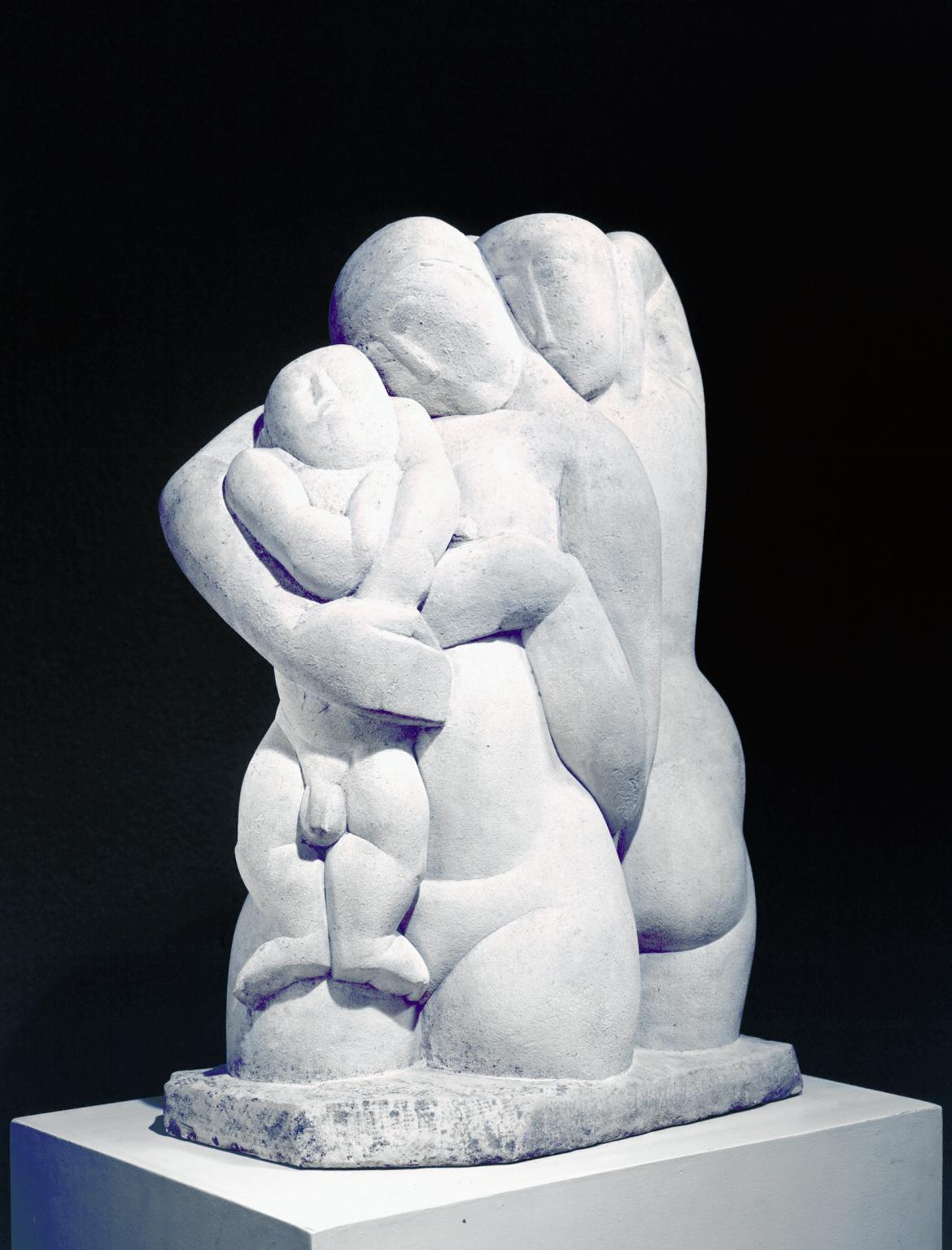
Frank Dobson, The Man Child 1921
Dobson trained as both a painter and sculptor, but concentrated on sculpture after active service in the First World War. Like many of his contemporaries, he found inspiration for his work in the ethnographic collections of the British Museum. He particularly admired carvings from the Congo in Africa. Such interest in what had been considered ‘less civilised’ cultures became more widespread after the ‘sophisticated’ destruction of the war.Here, in the wake of conflict, Dobson returns to fundamental human relationships. The manchild of the title melds with two female figures who seem to embody maternal protection expressing both joy and fear for the new life.
Gallery label, July 2007
27/30
artworks in Reality and Dreams
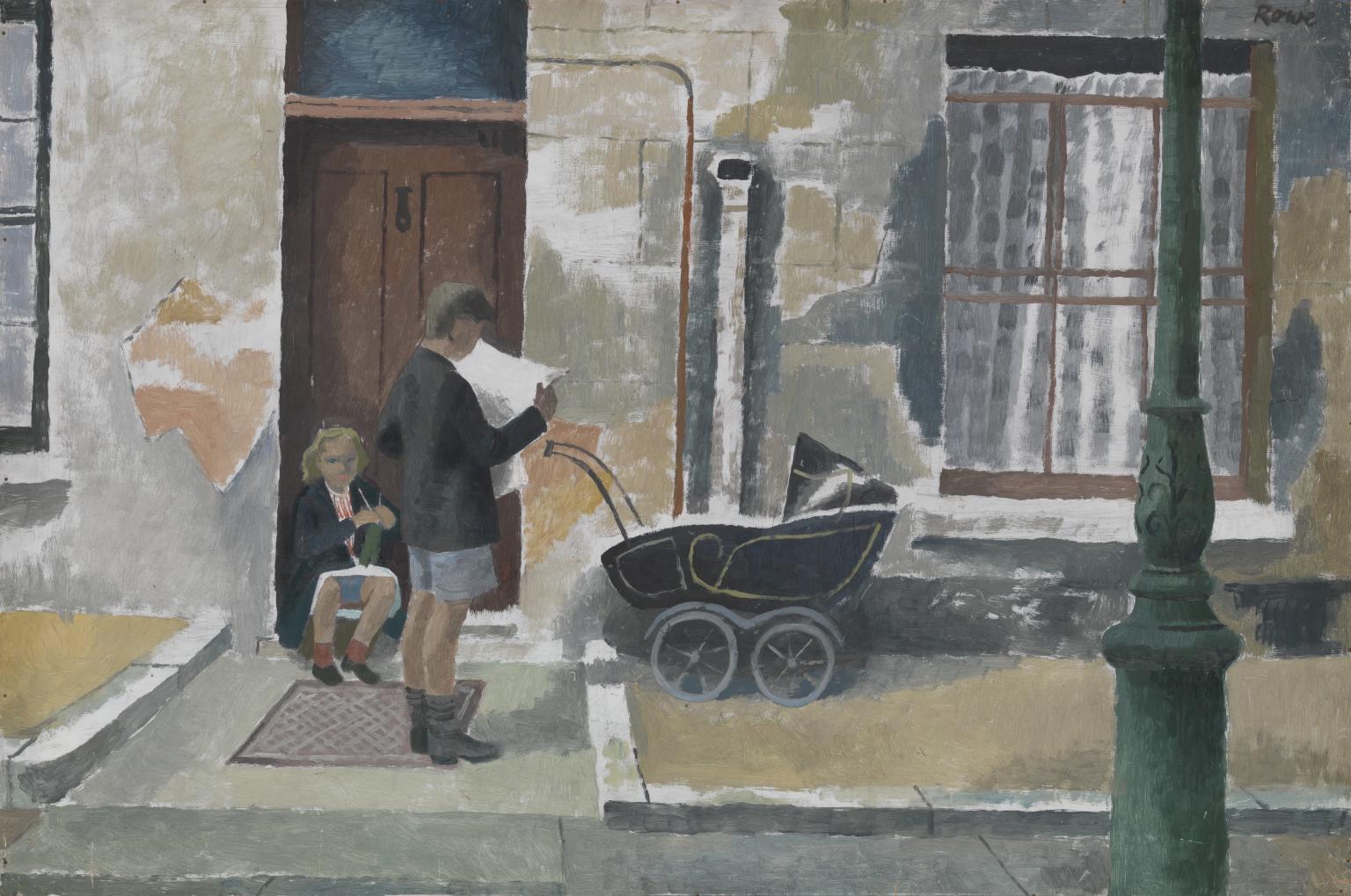
Cliff Rowe, Street Scene Kentish Town c.1931
28/30
artworks in Reality and Dreams
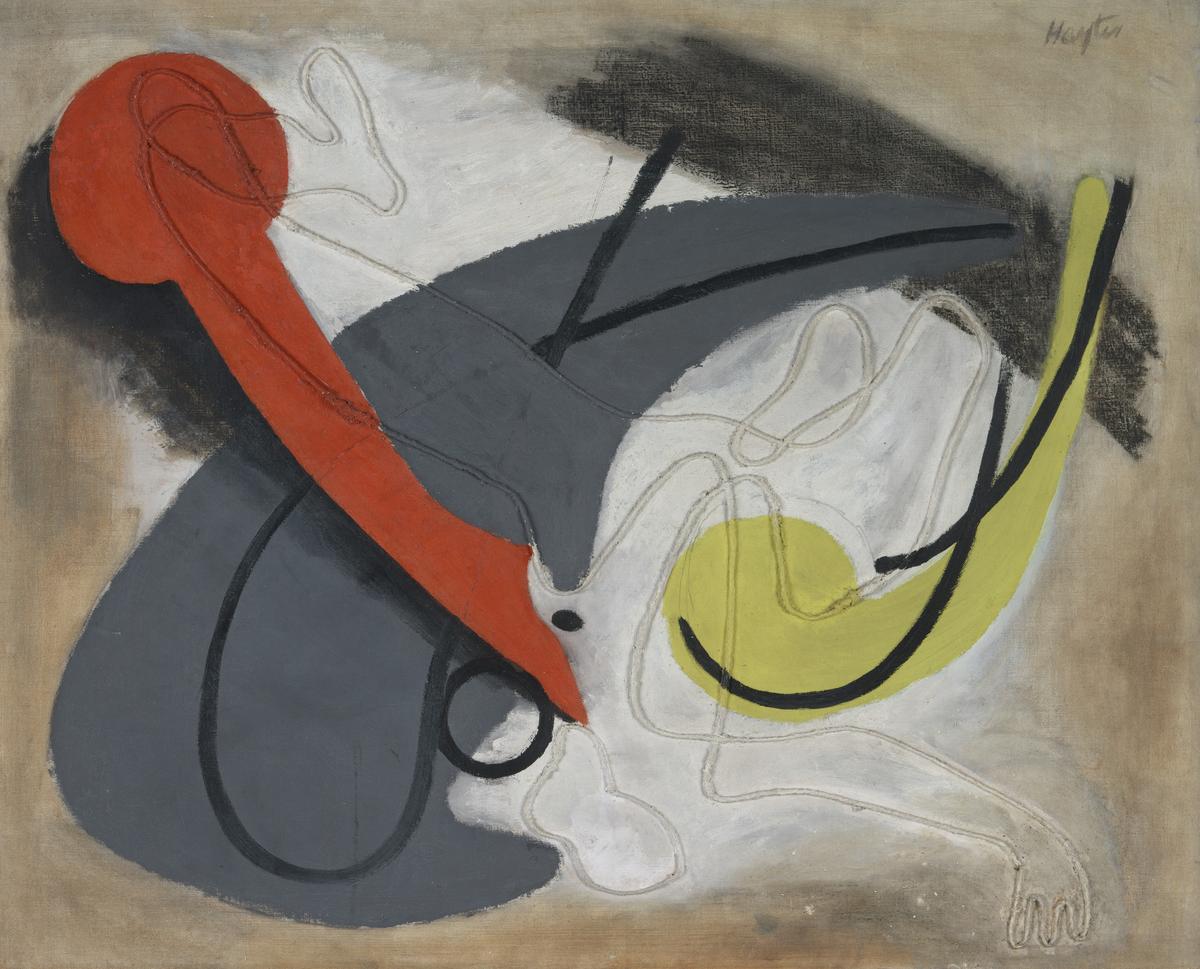
Stanley William Hayter, Murder 1932–3
Murder 1932–3 is a painting that is read as both an abstract composition of shapes, lines and colour, and a semi-figurative scene. The title ‘Murder’ encourages the viewer to associate its forms with the violent act of killing, and so parts suggesting the human figure take on added narrative and emotional significance. Further detail of the narrative content (who is involved in the murder, as well as when and where it takes place) remains unspecified.
29/30
artworks in Reality and Dreams
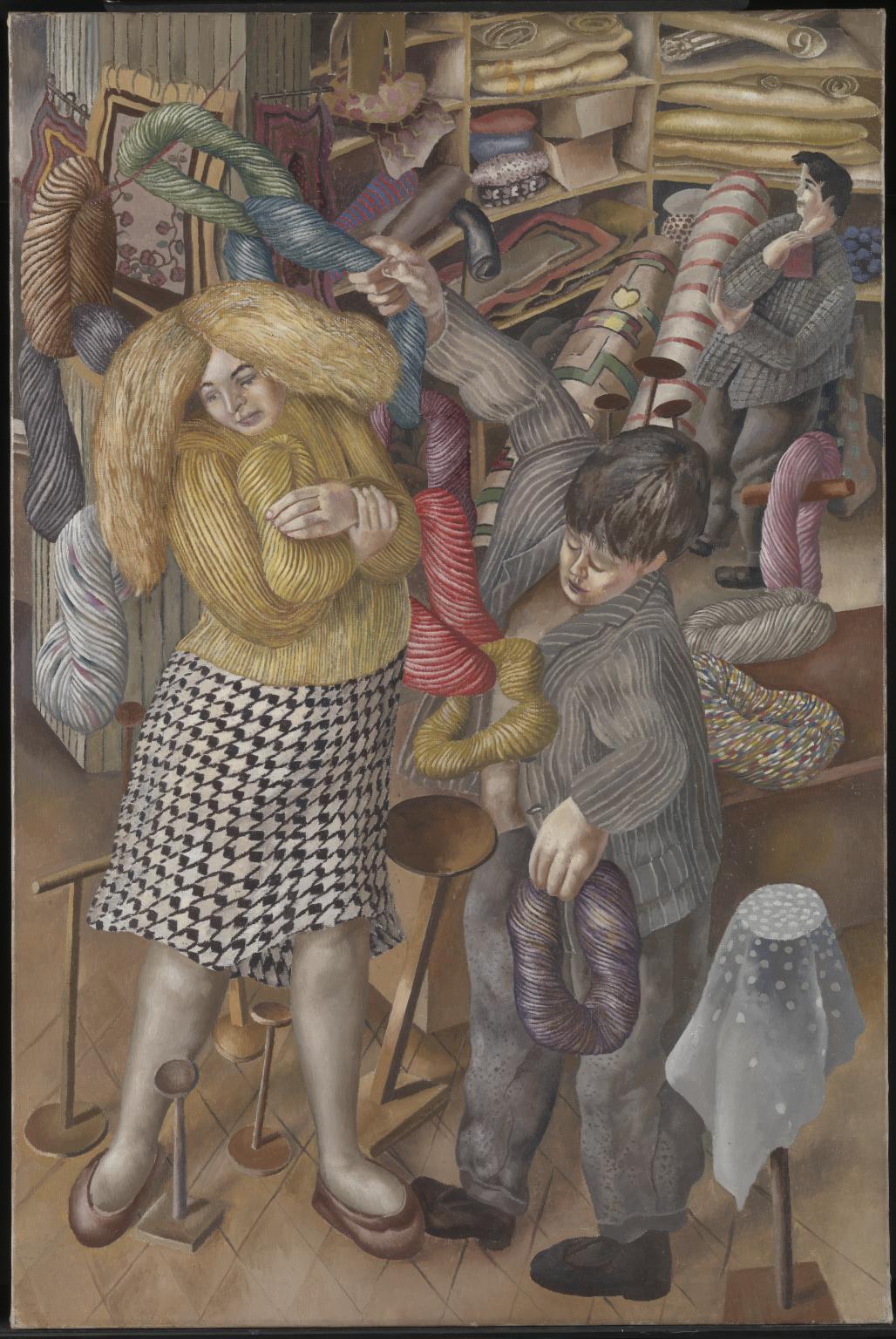
Sir Stanley Spencer, The Woolshop 1939
This work was inspired by Spencer’s visit to a wool shop with his friend Daphne Charlton while staying in rural Gloucestershire at the end of the 1930s. It originates in a series of drawings of Charlton and himself and was made in the wake of his turbulent relationship with his second wife, Patricia Preece, and after leaving his former home at Cookham in Berkshire. Spencer later recalled that ‘Stonehouse had several of these small local shops such as I remembered years ago in Cookham. The Cookham ones must have emigrated there.’
Gallery label, November 2016
30/30
artworks in Reality and Dreams
Art in this room
Edward Wadsworth
Bronze Ballet
1940
Sir Jacob Epstein
Esther
1930
Frances Hodgkins
Flatford Mill
1930
Ceri Richards
Two Females
1937–8
William Roberts
The Cinema
1920
Julian Trevelyan
A Symposium
1936
You've viewed 6/30 artworks
You've viewed 30/30 artworks